

Saarbrücken, June 20, 2026 - Even before the start of the National Games in Saarland,
Dennis Mellentin, Vice President for Athletes at Special Olympics Germany
(SOD), proudly announced that the involvement of athletes over the past years
had changed so positively that one can now say with full conviction:
By athletes, for athletes. Mellentin’s assessment was 100 percent confirmed during
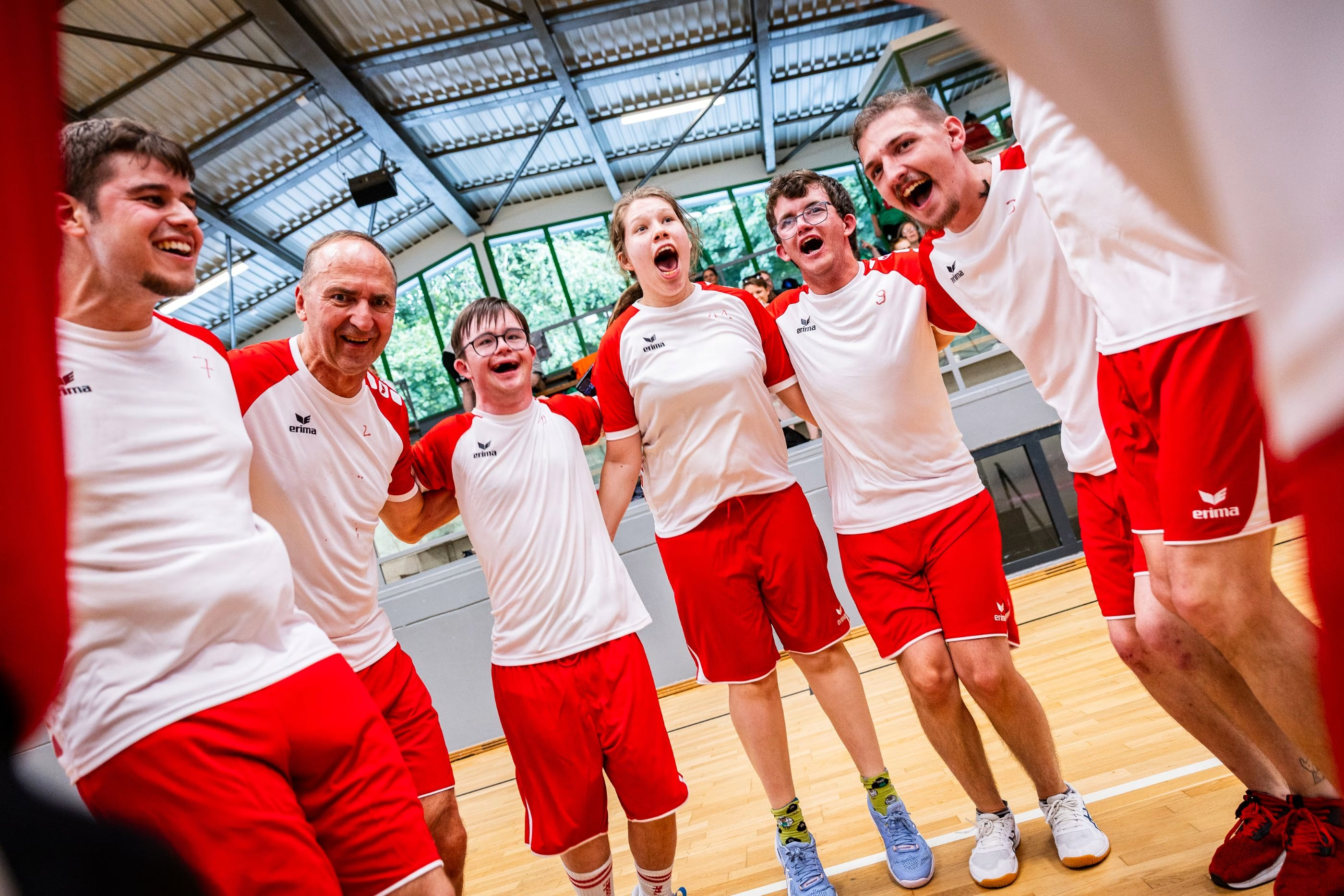
the games. Athletes not only participate in the sports,
but current and former athletes also shape the games in terms of content and orientation,
they are represented on committees, and they work
both in full-time and volunteer capacities.
The athlete working group, founded specifically for the National Games,
has changed the games, said Wiebke Linnemann-Schweizerhof,
Program Director at SOD, at the closing press conference on Saturday,
“they want to have a say. And they were our source of opinions and ideas, whose voices are heard.”
SOD President Christiane Krajeweski also emphasized the positive change:
“I feel a great joy about the personal development of many athletes.
Our athletes are strong, they are resilient, they present themselves confidently.
With their attitude, they are role models for our society.”
In general, it was noticeable that more people with disabilities were involved in these games than in previous events,
both in the full-time organization and among the 3,100 volunteers.
Christiane Krajeweski summed it up succinctly: “Inclusion makes it possible.”
Saarland’s athlete spokesperson Tim Theobald, also a member of the working group, interpreted inclusion pragmatically:
“I told many friends to register here as volunteers. Some did.
Many simply don’t know how to interact with people with disabilities.
This is something you can learn here.”
That is exactly why the school project related to the games was so highly appreciated.
The organizing Team Saarland had committed several hundred school classes to engage with the Special Olympics theme in advance
and then experience the games live at the sports venues.
As a welcome side effect, the students brought a fantastic atmosphere to the halls and fields,
but the main effect is even more important: This helps break down barriers and fosters encounters between people with and without disabilities already in childhood.
“We take from these games that inclusion works when we meet people where they are,”
Wiebke Linnemann-Schweizerhof noted. For this reason, the school project will be further expanded in the future.
The lively and highly praised National Games are intended to have a lasting impact.
Saarland’s Sports Minister Reinhold Jost, for example, sees the 10-million investment made for these games in barrier-free sports facilities
not as the final goal for successful inclusion, but as a beginning.
“It must continue,” he said. The games can help enable more inclusive sports for all people in the future,
one of the main goals of Special Olympics.
[advertisement placement="medium_rectangle" align="right"]They also contribute to making Special Olympics and especially the athletes more visible in society.
In the Saarland host cities, participants, their families, and visitors were very present during the six days,
both at the sports venues and in the city centers, where they shaped the scene throughout the week.
The organizers were also very satisfied with the media response, despite the Football World Cup in the USA.
The media alliance of the eight largest media houses in Germany contributed once again.
Only the broadcast of the opening ceremony brought Saarländischer Rundfunk a 14 percent audience share.
The prominent elite athletes who act as Special Olympics ambassadors and spread the fascination of Special Olympics to the world also attract public attention.
At the same time, they are role models, inspiration, and motivation for the athletes when they train together,
exchange with them, or award the medals. This also works the other way around:
The elite athletes take away just as much from the athletes. Representing all of them,
tennis player Andreas Mies, who won the doubles at the French Open 2019 and 2020 with Kevin Krawietz, promised:
“I will promote this and send everyone over.”
The health program “Healthy Athletes” was once again invaluable,
with 2,750 examinations exceeding expectations — 2,000 examinations had been planned.
Due to the high temperatures, health was naturally a dominant theme, especially since Wednesday.
The organizers implemented all necessary protective measures: moving competitions to the morning hours,
announcements over loudspeakers about how to protect oneself, enough free drinks at all venues, and additional shaded areas.
When it got hotter on the tennis court in Saarlouis,
the resourceful organizers called the volunteer fire department, which arrived within 30 minutes and set up a sprinkler system.
The Saarland team received much praise for the organization, for the cross-border concept,
for the representation of their homeland, and last but not least, for the warmth with which participants and visitors were welcomed.
110,000 people were reached at the sports venues, and all of them noticed that something very special was happening here.
The overwhelming joy over medals and ranking ribbons, personal bests, or simply finishing well,
touched everyone. Friendships were renewed and newly formed.
“It’s a pity it’s over,” said the SOD president, expressing what many surely felt.
Athletes actively shape programs and inclusion in a sustainable way
Tags:
