

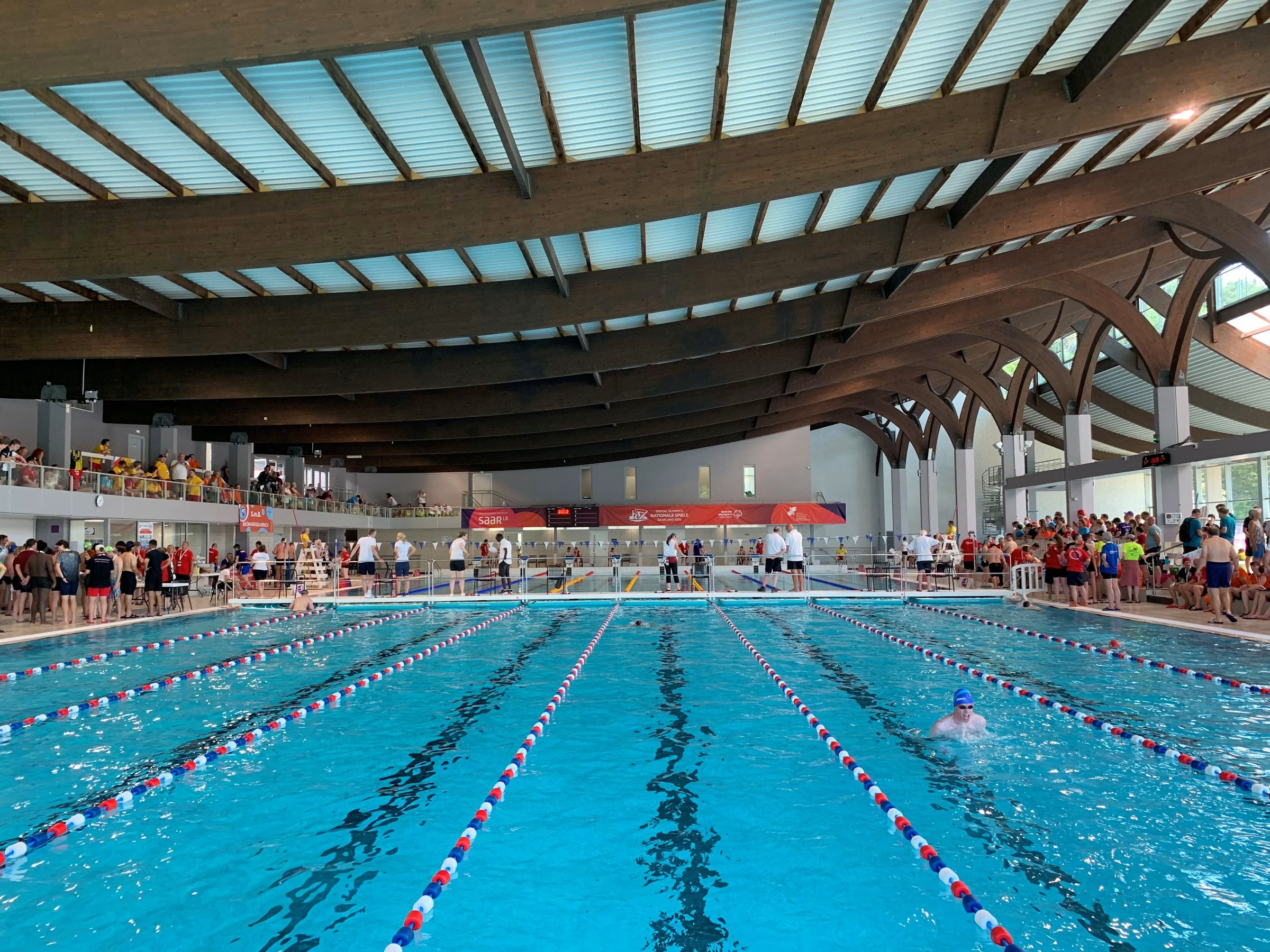
In the heart of Europe: The Special Olympics National Games 2026 in Saarland will be held cross-border Some athletes of the Bunte Sportgemeinschaft (BSG) Neckarsulm have never been to France. "That’s why we went shopping in Forbach yesterday," said BSG swimming coach Angela Pim, "so they could see what it’s like in another country." The swimming competitions of the Special Olympics National Games 2026 in Saarland will take place at the swimming pool in the French town of Forbach, the "Piscine Olympique Communautaire Jean-Éric Bousch," just over ten kilometers from Saarbrücken. This year’s hosts of the Special Olympics National Games are the first to hold a competition in one of the 27 sports abroad. "We have never done this before," said Christiane Krajewski, the president of Special Olympics Germany, who particularly enjoys these games in her Saarland home. "What makes it special is the location and the region. We are here in the heart of Europe." What is new for Special Olympics is therefore quite normal for Saarlanders and the French living near the border in Lorraine. They collaborate cross-border in many areas and topics. And of course, the French are also among the twelve delegations participating in the games alongside teams from the German federal states. "For us, it was never a question to make the swimming pool available for Special Olympics," said Jean-Claude Hehn, president of the Forbach Porte de France community association. "But in any case, it is a nice example of cross-border cooperation. It reflects our friendship and solidarity for an important cause, inclusion in sports." For this reason, the swimmers at the games now have the benefit of competing in the highly modern "Piscine Olympique," where the French national team trained for the 2024 Olympic Games in Paris. For Isabel Hohneck, who speaks French fluently and is volunteering at the games in Forbach, thinking and acting cross-border is completely normal. By profession, she is an interpreter and translator, but she also works as a coach in German shooting sports and knows that the border is practically non-existent among shooters. In her second-division team from Püttlingen, there are five French athletes, and French teams operate similarly in reverse. Even at French championships, German shooters are allowed to participate. Hohneck, who grew up near the border in Saarland and returned to her homeland after 13 years abroad, also reports close economic cooperation and a general awareness that in Forbach and its surroundings, the border essentially does not exist. French is generally the first foreign language taught in schools, and many kindergartens already lay the first foundations. Among the older Saarlanders on one side and Lorrainers on the other, the languages have blended into an almost common dialect, although this is rather disappearing. Naturally, shopping still takes place on both sides to enjoy the best of both countries, just like the athletes of BSG Neckarsulm did. Through their unique concept, the hosts of the Special Olympics National Games 2026 make perfect use of their geographical proximity to France, their political contacts, and everyday realities. Thus, they set a sign for encounter, cooperation, and inclusion not only throughout the federal state but also across national borders. Text: Ulrike Spitz
Competitions are taking place for the first time in Forbach, near Saarbrücken
Tags:
