

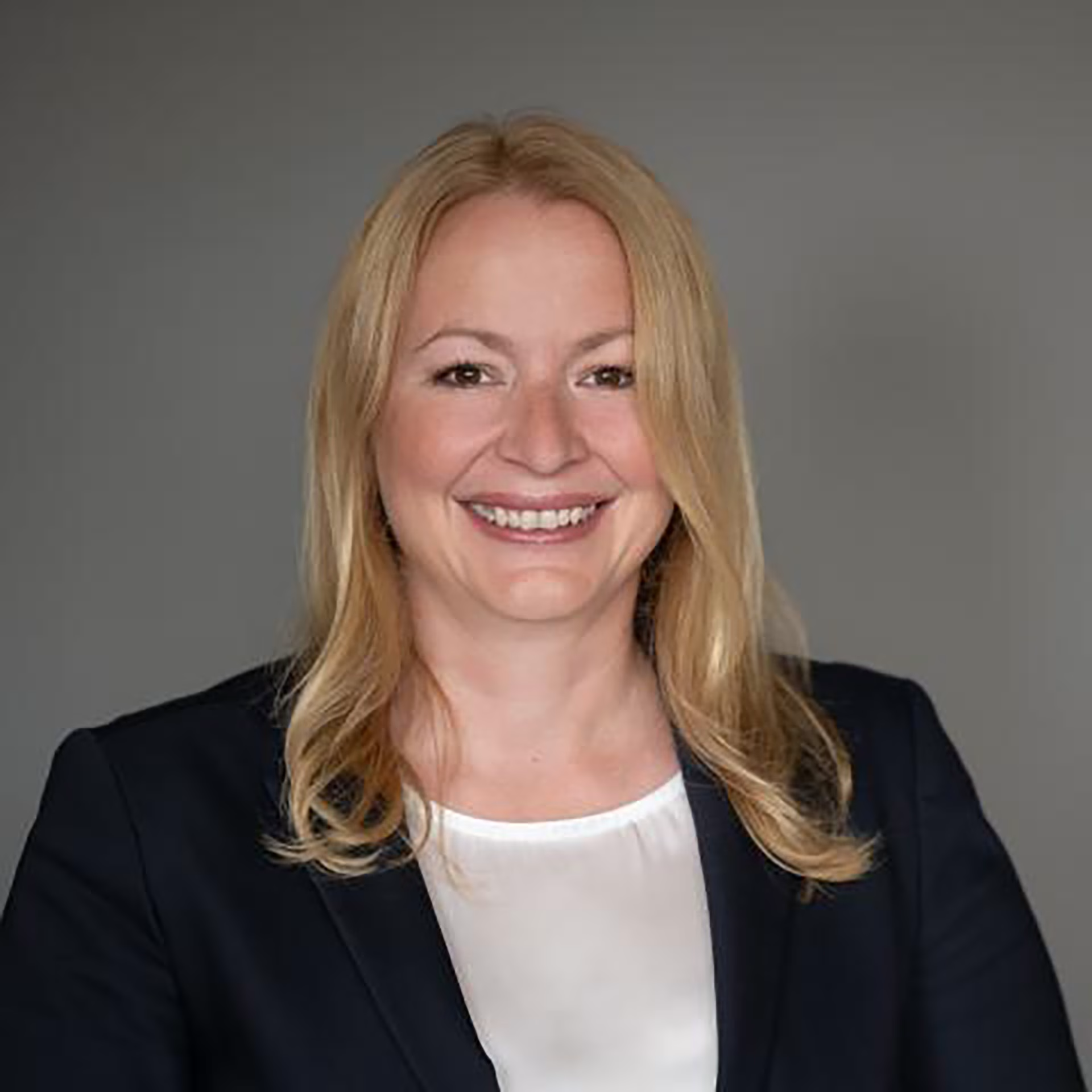
Christine Streichert-Clivot: "Creating a strong and social Europe is a true matter of the heart for me as a committed European. Intercultural experiences have been proven to promote values such as tolerance, compassion, and the development of a European sense of community. In the border region, we maintain good educational political relations with our neighboring countries, and through the Weimar Triangle also with Poland. I wish for such constructive cooperation in favor of a more inclusive and fair education system throughout the entire European Union, one that ensures educational equity for all children and young people. No child should be left behind – neither in Germany nor in Europe. Because for educational success in Europe, the country in which children and young people grow up must not be decisive. We need fair opportunities and the best individual support from the outset. I am convinced that European cooperation and mutual exchange are the key to achieving this goal. I am already looking forward to this new and exciting task."
The federal states will work constructively on the development of the European Education Area, which offers fair opportunities to all people and views diversity as a strength and opportunity. The focus is on the individual needs of students as well as societal challenges, including in the international context.
“I also want to bring the impulses of the Saarland KMK Presidency in 2024 to Brussels. Especially in view of the dynamic developments in our societies, we are called upon to create a future-proof educational landscape at the European level. Based on our shared values, we want to promote language skills as well as democracy and European education in schools, further strengthen cross-border exchange, and shape the transformation boldly and together – especially in the field of digital education and against the backdrop of the rapid developments around AI in schools,” said the Minister.
Streichert-Clivot will work together with the EU member states to ensure that the European Education Area becomes a space for dialogue, knowledge, networking, and mutual support. A holistic approach is intended to reduce educational inequalities and improve access to high-quality education for all. At the same time, the transitions between the different educational sectors are to be designed even better. The countries are aware of their responsibility to be active not only at the national but also at the European level in order to create a European Education Area that meets the social, economic, societal, and cultural challenges of the 21st century.
Background
The Council "Education, Youth, Culture and Sport" is composed of the ministers responsible for education, culture, youth, media, communication, and sport from the EU member states, who enact laws (in cases where the treaties allow it) and initiate and coordinate political measures. The EU Council of Ministers meets in various configurations three to four times a year. The Council's objectives are to preserve Europe's cultural heritage, support its cultural and creative industries as well as the mobility of students and staff, and promote physical activity and social inclusion through sport.
