

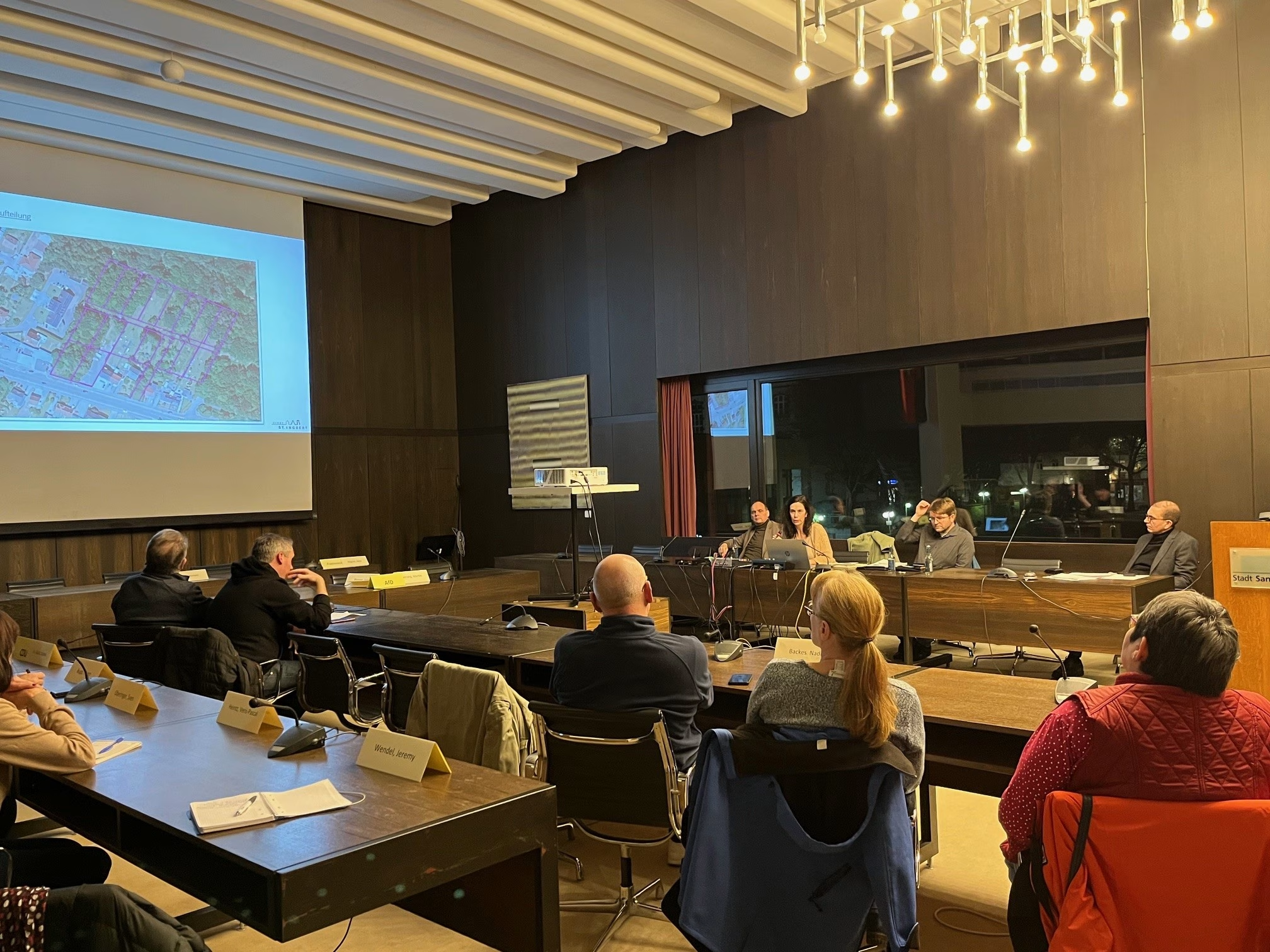
Raffaella del Fa, responsible for urban development in St. Ingbert, presented the preliminary plan for the development. A parcel already owned by the city is planned as an access road. A T-shaped street connects to it, along which construction in two rows is possible. According to the wastewater management company, the sewage system in the surrounding area is operating at its capacity limit, so a retention basin on the site is urgently needed.
Procedure of voluntary reallocation
Architect Thomas Dillinger from IGS Dillinger explained the possible voluntary consolidation procedure to the property owners, according to which the entire site including utility zones is calculated. The building plots are then redistributed proportionally, whereby the original value of the property remains unchanged and the location of the individual plot is largely taken into account. The vulnerable development costs are also calculated based on this allocation. A prerequisite for voluntary consolidation is that all around 15 property owners agree or transfer their plot in exchange for compensation.
The advantages of a voluntary land readjustment, according to lawyer Dr. Holger Kröninger, include, among other things, a likely increase in the value of the property after development and the assumption of 10% of the development costs by the city of St. Ingbert.
After an extensive question and answer session, during which the property owners were able to express all uncertainties, Ms. del Fa will now address individual concerns in one-on-one meetings and inquire about the willingness for voluntary land pooling. If the procedure becomes feasible, the city will promptly commission soil and wastewater assessments in order to implement the development as quickly as possible.
