

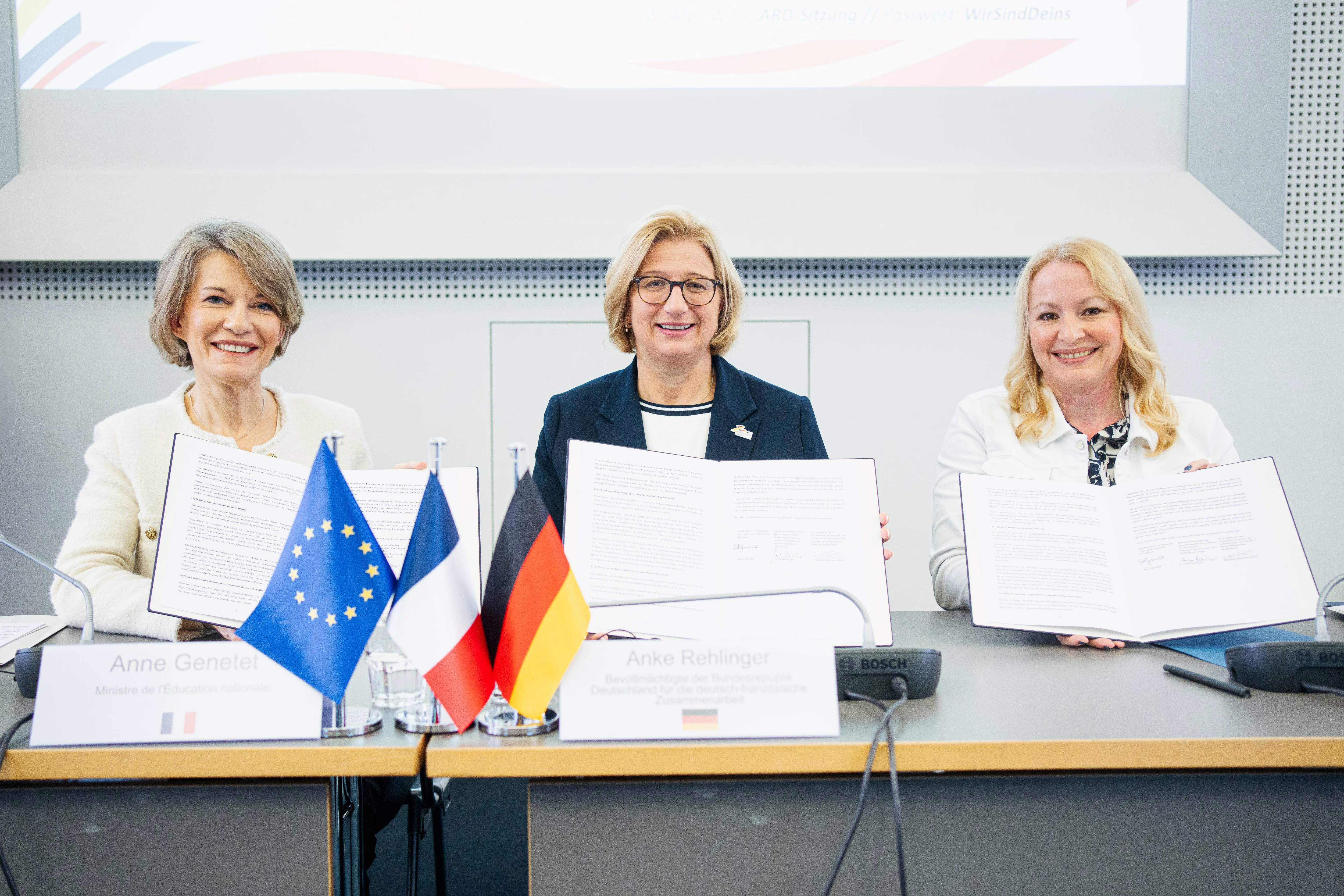
The conference, held at the invitation of the Commissioner for Cultural Affairs within the framework of the German-French Cooperation Treaty, Prime Minister Anke Rehlinger, as well as the President of the Conference of Ministers of Education, Minister Christine Streichert-Clivot, and the Minister for National Education of the French Republic, Minister Anne Genetet, provided a platform to discuss the challenges and opportunities of educational cooperation between the two countries.
Christine Streichert-Clivot, President of the Conference of Ministers of Education 2024 and Saarland’s Minister for Education and Culture emphasized: “The German-French cooperation is one of the most important building blocks for making our education systems future-proof and mastering challenges. Over the past two days, we have worked on how we can utilize the potentials of our education strategies to actively shape transformation processes in our education systems. Education and language are the key to social participation and strengthening our future. Together, we want to provide our students with the best conditions for their personal and professional development. To this end, we are developing innovative teaching and learning concepts and attractive learning environments that enable young people to navigate competently in both the analog and digital worlds. Language and future skills are more important than ever — and through dialogue, exchange, and intercultural experiences, we bring people together. We will use the results of the conference for future initiatives and projects in German-French educational cooperation. We look back on successful days and look forward to continuing our close collaboration in the education sector.”
Anke Rehlinger, Commissioner for Cultural Affairs within the framework of the German-French cooperation agreement and Prime Minister of Saarland, emphasized: “German-French cooperation in the field of education is essential for us to strengthen shared values such as trust and understanding and to build bridges for dialogue and mutual comprehension in Europe. The education ministers of the federal states and the French Recteurs d’Académies have today not only reviewed the existing measures for learning the partner language but also agreed on further measures together. Together, we promote the cross-border awareness of our children and young people regarding the significance of German-French friendship and cooperation for the future and unity of Europe.”
"Above all, we need valued, motivated, and proactive teachers to bring the excellence of educators to the service of the excellence of students. (Above all, however, we need teachers who are strengthened by appreciation, motivation, and determination to promote the development of strong and confident children and young people.)," added the French Minister of National Education and Youth, Anne Genetet.
The conference was thematically linked to the 2024 presidency theme of the KMK president, "Education in times of change - boldly shaping transformation." The focus was on questions such as: How can German-French cooperation contribute to transformation processes? How can the acquisition of foreign languages be promoted with the help of artificial intelligence? At what points could we coordinate with each other to set important and appropriate courses for our education systems at the European and international levels? These and other questions were discussed intensively. The event included several discussion rounds addressing key topics such as the attractiveness of the teaching profession, the use of digitalization and artificial intelligence to support language acquisition, as well as the development of new occupational profiles in the context of the skilled labor shortage. The participants agreed that close cooperation in these areas at all levels of German-French educational cooperation, especially between states and academies, is indispensable to meet the challenges of digital transformation and demographic development.
For this reason, the "Saarbrücken Declaration" was adopted by the Commissioner for Cultural Affairs within the framework of the Treaty on Franco-German Cooperation, the President of the Conference of Ministers of Education, and the Minister of National Education and Youth of the French Republic. The aim of this declaration is to strengthen and deepen cooperation in the field of education in times of change, global crises, and diverse societal challenges. Education is the key to successfully shaping transformation processes in France, Germany, and Europe.
Background
The “Recteurs d’Académie” are the highest school supervisory officers of an administrative district (Académie) in France and hold the rank of a state secretary. They report to the French Ministry of National Education (Ministère de l’Education Nationale), which is currently headed by the French Minister of Education, Anne Genetet.
The meetings, which take place every two to three years alternately in Germany and France, between the highest German and French decision-makers in the education sector aim to strengthen the decentralized Franco-German educational cooperation between states and academies. This cooperation, institutionalized for over two decades now between the states and Académies, holds particular significance in the implementation of the Élysée Treaty and the Aachen Treaty. Through this continuous and increasingly intensive collaboration—both on a decentralized and personal level—these two treaties are brought to life and the Franco-German friendship in Europe is strengthened.
