

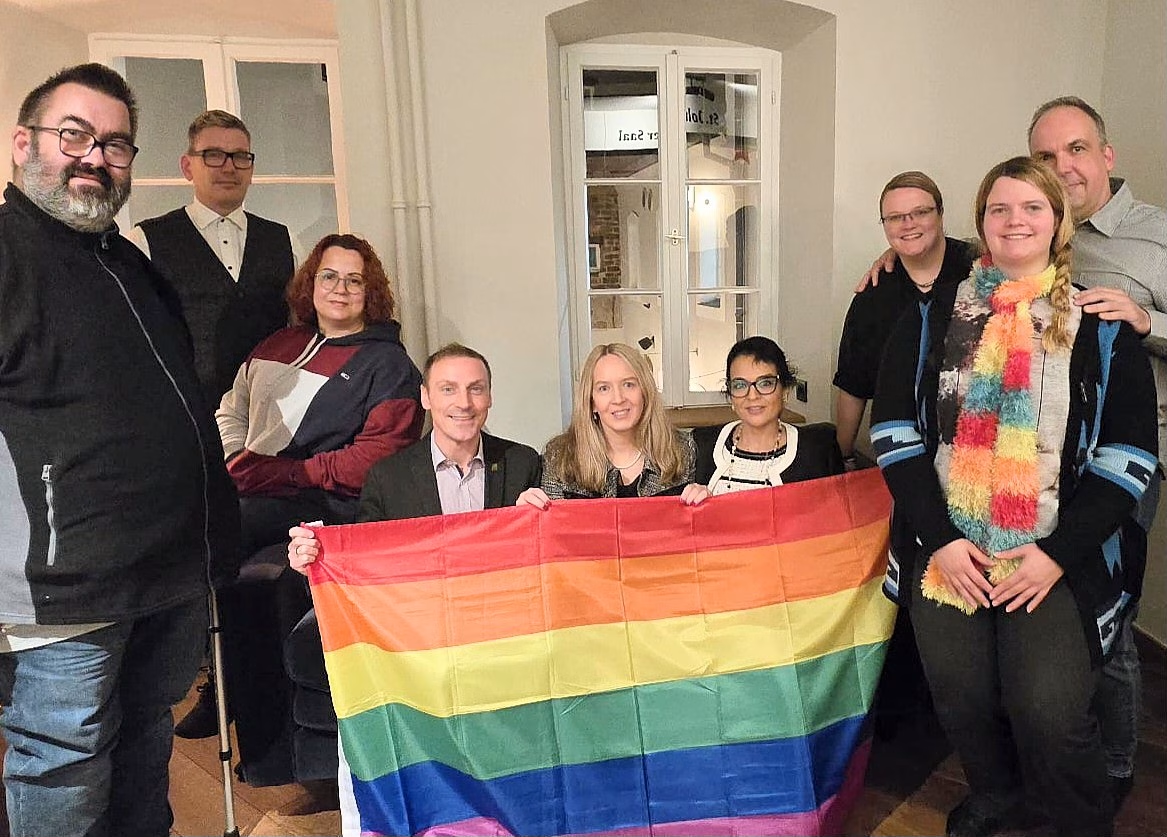
Julia Grewe has been active in the LSU for several years and previously served as Deputy State Chairwoman. She was also a member of the LSU federal executive committee, where she was able to establish herself as chairwoman of a specialized committee dealing with the issue of anti-LGBTIQ discrimination. This topic is also one of her main motivations for her future commitment as the head of LSU Saar. She explains: "Currently, the social climate regarding sexual minorities is becoming harsher again. Furthermore, societal acceptance of LGBTIQ people is declining again, as surveys show. We want to clearly state our position on this and push for the concrete implementation of measures in the areas of law enforcement and protection against violence. The state action plan for diversity and acceptance must not just be a paper tiger. Measures recorded there must also be implemented and their effectiveness reviewed."
With regard to the state's policy in this area, she also makes it clear: "I am grateful to the CDU parliamentary group in the Saarland state parliament for repeatedly putting the issue on the agenda, especially in the Interior Committee. However, to this day, the SPD government has yet to provide, for example, a situation report on LSBTIQ-hostile violence in Saarland, the creation of which they themselves promised over 2 years ago. Given the annually increasing case numbers nationwide in this area, urgent action is actually required. I cannot explain why this has not been a priority so far."
As part of the state members' meeting, Isabelle Funk and Thomas W. Schmitt were also elected as deputy state chairpersons. René Funk was elected as state treasurer and will be responsible for the financial affairs of the state association in the future. In addition, the members elected Tina Frank, Torsten Käufer, Doreen Grewe, Nadine Schwegel, Michael Horn, and Carmita Utta as assessors to the new state board. The new executive team aims, above all, to advocate for explicit protection against discrimination for LSBTIQ in Article 3 of the Basic Law. A point that has already been a reality in the Saarland constitution since 2011.
