

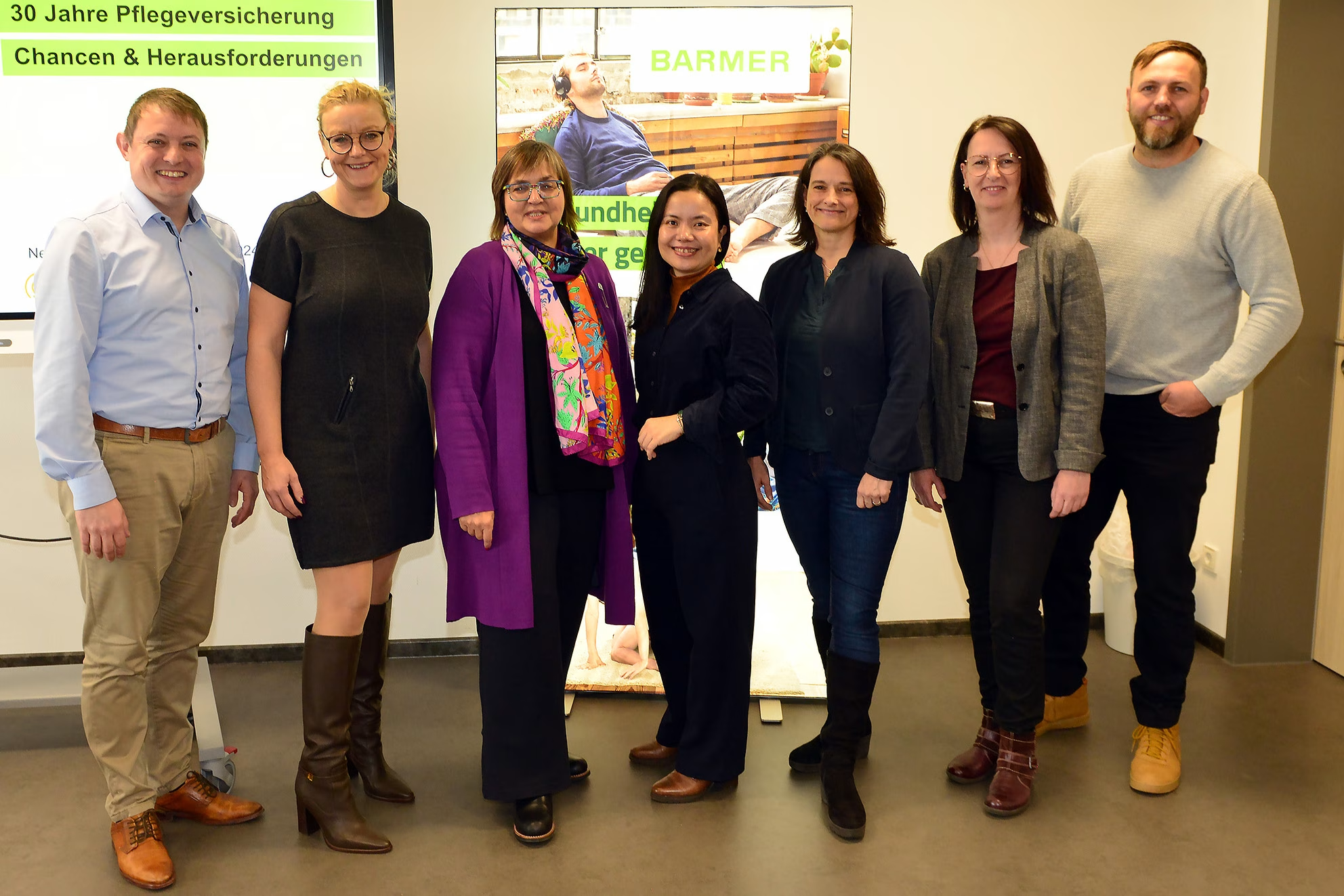
Due to the increasing number of people in need of care, Saarland will require about 1,200 more nursing professionals in 2030 than in 2022. The situation in nursing is already difficult today due to the shortage of skilled workers,” said Dunja Kleis, State Managing Director of BARMER in Rhineland-Palatinate and Saarland. The shortage of skilled workers is exacerbated by the comparatively high sick leave in the nursing sector: “For many nursing professionals, psychological stress leads to an early exit from working life alongside physical strain. Appropriate compensation for nursing staff is necessary, while at the same time limiting the personal contributions of those in need of care.” Equally important are better working time models that make it easier to balance family and work in the nursing sector.
"Welcome must become Staying"
Florian Dessbesell from BARMER's International Unit said: "Successfully recruiting employees from the international labor market is becoming increasingly important in times of skilled labor shortages. Both formal and cultural challenges play a decisive role in this. Welcoming must turn into staying. BARMER supports companies in the targeted integration of new employees into a company and advises, among other things, on compliance with formalities such as applying for a tax number."
"Behind private care facilities, there is usually no large corporation"
Mechthild Hoffmann, state representative at the Federal Association of Private Providers of Social Services (bpa), said, “The bpa is a strong association that can do a lot for its members. However, the recruitment of employees from abroad cannot be managed by private care facilities alone. The tasks are too diverse and complex. Private care facilities are usually not backed by a large corporation that can provide manpower, know-how, and appropriate structures. Therefore, the task can only be solved within a network.”
"Integration of international skilled workers is a comprehensive process"
Nadja Kowalski from the CEB Academy in Merzig said: "The integration of international professionals and trainees is a comprehensive process that begins in the home country and is far from complete even after the qualification is finished. In addition to adequately preparing people from third countries regarding life and work in Germany, the institution should also be prepared for the newcomers. Integration should never be understood as a one-way street. As the CEB Academy, we support the integration process of people in their various social spaces and act as intermediaries for both the institutions and the school. To ensure that the new nursing staff can and want to feel at home in Saarland in the long term, we offer them, in addition to support with formalities, cultural and social integration through a variety of programs."
Request: Review of eligibility for long-term care insurance benefits
Nicole Grundhöfer-Kukfisz, managing director of the Saarland Nurses' Association, one of the largest providers of care services in the region, said: "As operators of inpatient, partial inpatient, and outpatient care services, we are currently facing particularly challenging times. Our expectations and demands for reforming long-term care insurance include halting the excessive bureaucratization of long-term care insurance, for example with the new staffing measurement system in inpatient care or in the contract design with service providers, as well as further dynamization of long-term care insurance benefits to curb the rapid increase in the co-payments of those in need of care. We also call for a critical review of access to long-term care insurance benefits in the context of ensuring its financing."
