

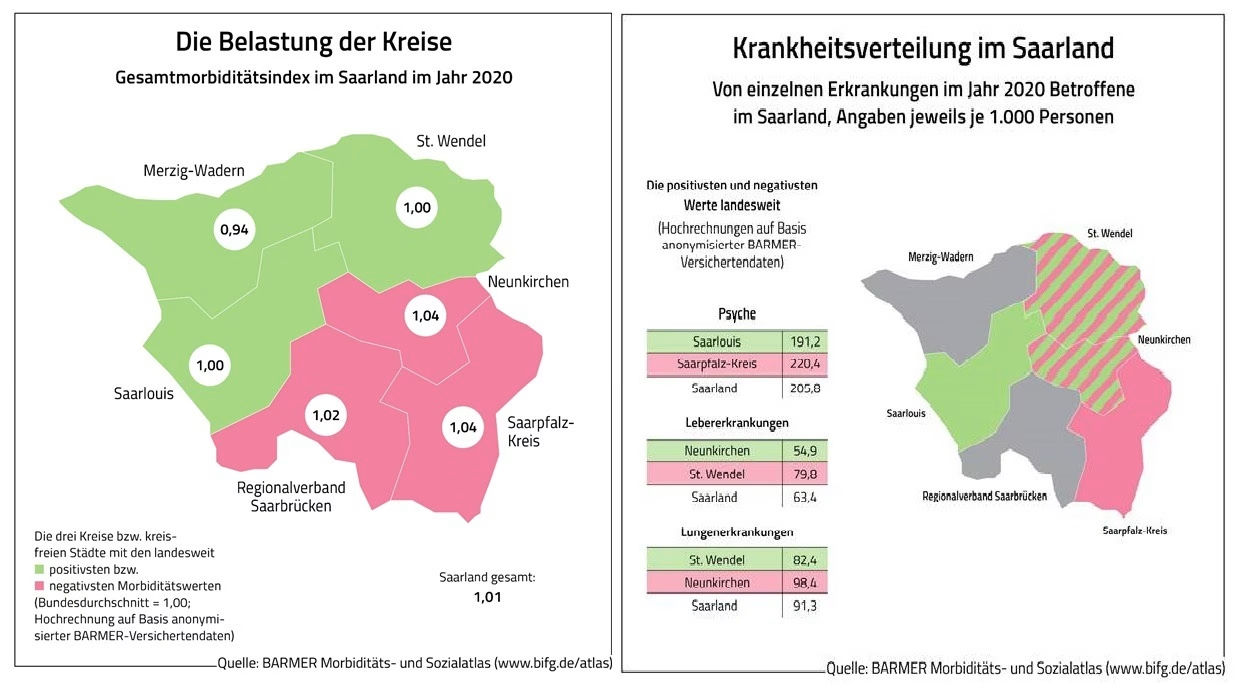
Compared to the national average, they bear only 94 percent of the average disease burden. The Saarpfalz district and the Neunkirchen district are the most heavily affected, with a total burden of 104 percent. This information comes from the Morbidity and Social Atlas of the BARMER Institute for Health System Research (bifg). The atlas, based on anonymized and standardized insured data, shows how severely the population in Saarland is affected by illness. “The Morbidity and Social Atlas provides a realistic picture of the health situation of the people in Saarland. It also enables detailed statements on important diseases, highlights regional differences, and shows the influence of gender, age, income, education, and sector on the disease burden. Interactive graphics make access to the information much easier,” says Dunja Kleis, State Managing Director of BARMER in Rhineland-Palatinate and Saarland.
The fewest cases of dementia nationwide are in Saarland
According to the Morbidity and Social Atlas, no federal state has fewer cases of dementia than Saarland. Statewide, twelve people per 1,000 inhabitants suffer from this condition. The rate per 1,000 people ranges from ten patients in the St. Wendel district to 14 in the Saarbrücken regional association. For mental illnesses, Saarland has the third highest value among all federal states with 206 affected per 1,000 inhabitants, behind Saxony (214) and Berlin (213). “The main cause of mental problems in Saarland is depression. There is no federal state where acute, severe stress reactions are a more frequent cause of mental suffering than in Saarland,” says Kleis. In lung and liver diseases, Saarland ranks third among the federal states. With such insights, the atlas can provide important impulses for prevention. It also raises the question of how workplace health management can be further tailored to specific target groups, for example for older employees.
