

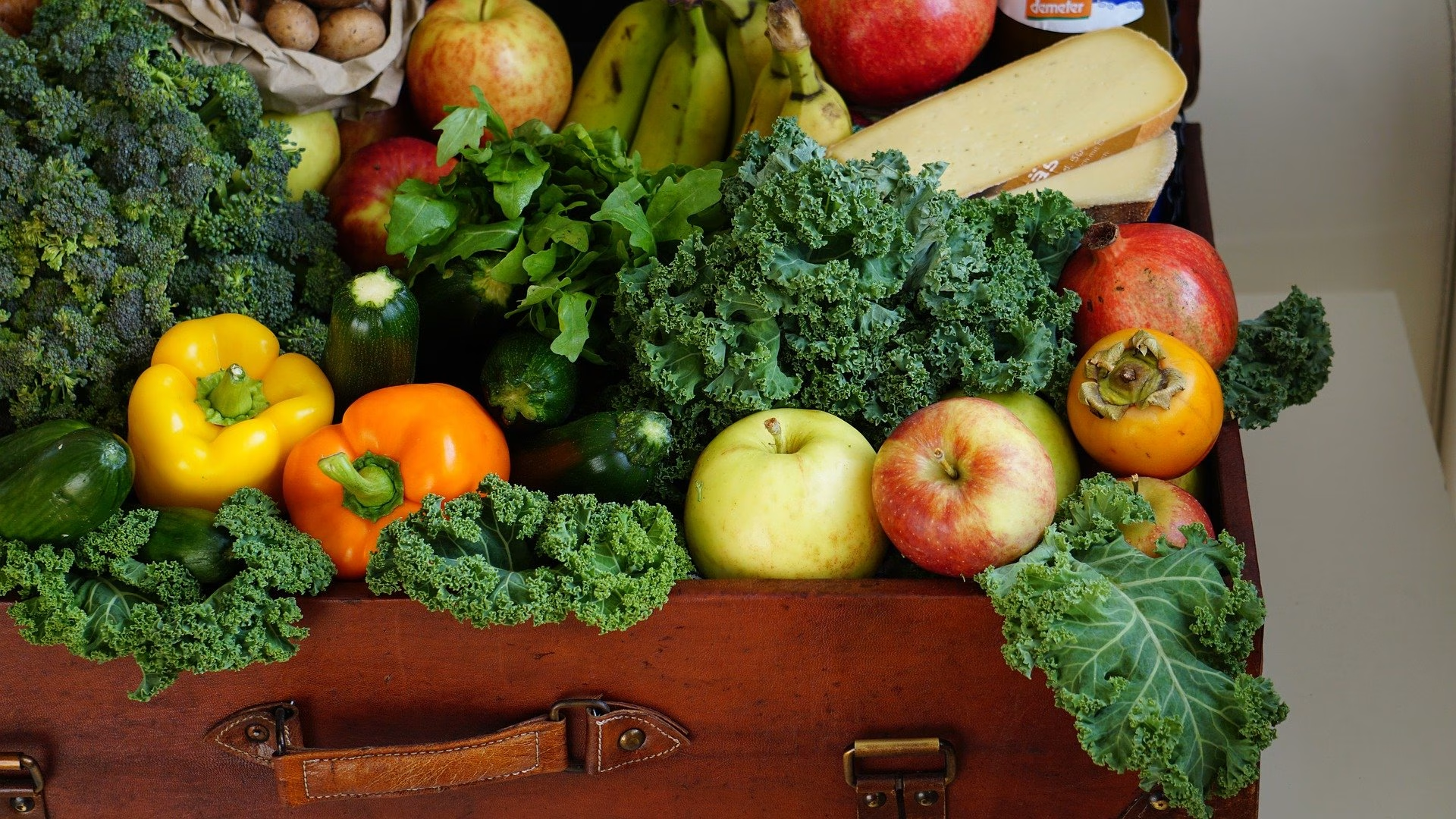
Starting next Monday, September 26, 26,800 children and adolescents in 233 institutions in Saarland will once again receive free fresh fruits and vegetables three days a week. Emphasis is placed on the quality, variety, seasonality, and regional origin of the products. The apples are – as far as available – produced locally in Saarland.
22,373 children in primary and special schools as well as in 5th and 6th grades of secondary schools, and 4,427 children in daycare centers benefit from the deliveries. The program has been running in Saarland since 2009 and has enjoyed great popularity ever since.
EU funds amounting to around 286,000 euros and an additional approximately 714,000 euros in state funds are available for the financing of the program. This has succeeded in keeping the funding almost stable compared to the previous year. "This is well and sensibly invested money. Through the school fruit program, we want to introduce children early to the taste of fruit and vegetables and thus contribute to establishing and maintaining health-promoting eating habits in the long term," emphasizes Minister Petra Berg, who is also responsible for nutrition.
Over the past 13 years, the Ministry of Environment, Climate, Mobility, Agriculture and Consumer Protection has invested a total of around 8.2 million euros in the EU School Program to promote healthy nutrition for children. "We want to continue on this path in the future," promises the minister.
Background:
Since 2009, Saarland has been the first federal state to successfully implement the EU School Fruit and Vegetable Scheme in Saarland schools.
The program essentially pursues two objectives:
– Health-promoting nutrition: Through the regular offering, children are encouraged to eat more fruits and vegetables and thereby develop a preference for these products.
– Nutrition education: The EU School Scheme is also an educational program. All participating institutions must carry out educational measures related to the topic of "health-promoting nutrition." These can include lessons in class, cooking courses, but also visits to farms or orchards. What is crucial is that children are introduced to agriculture and the diversity of agricultural products. Additionally, children should learn to appreciate food by being made aware of avoiding food waste, local food production chains, or organic farming.
