

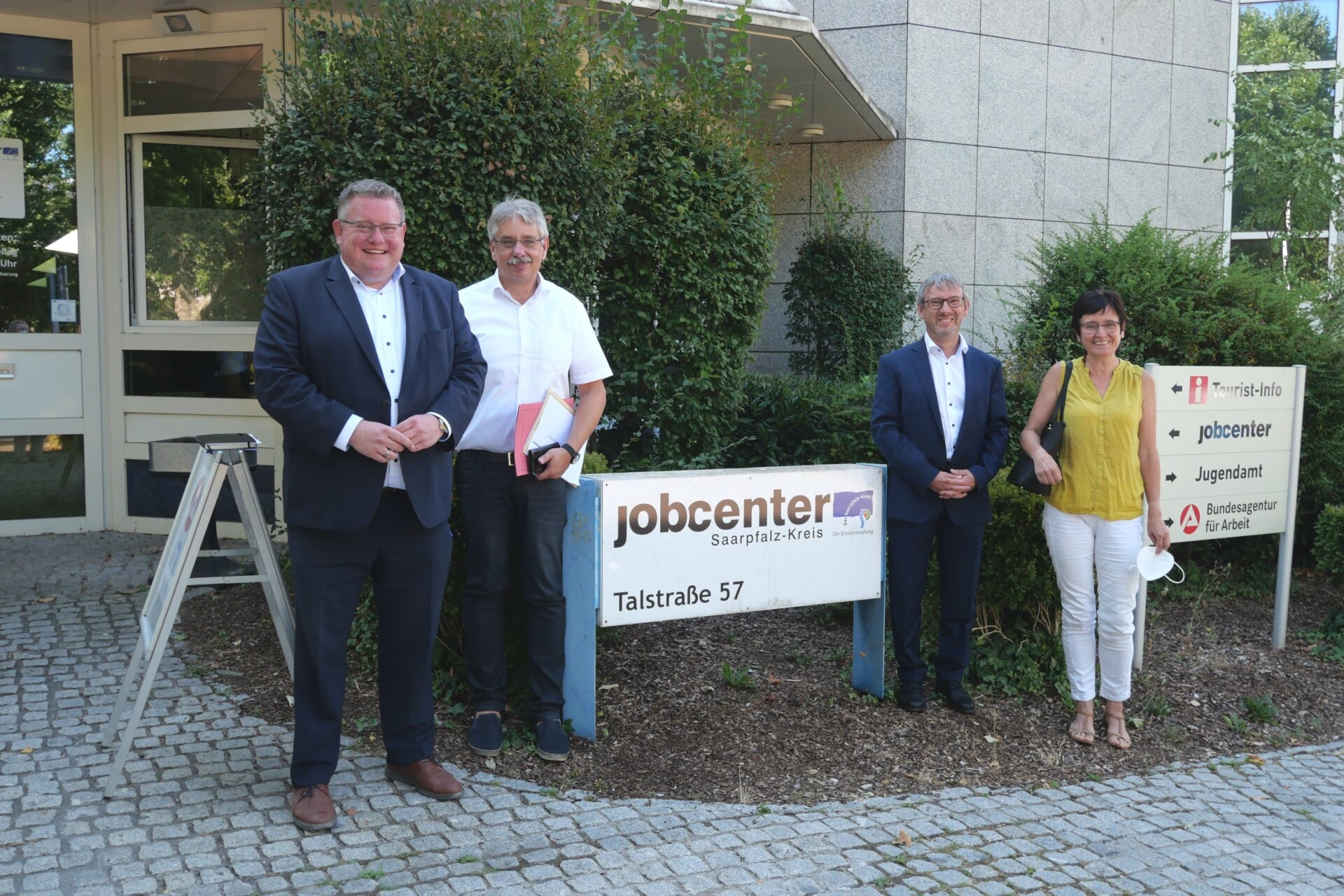
The Jobcenter of the Saarpfalz district was a program stop on the summer tour of MdB Markus Uhl. As a "full" member of the Budget Committee of the German Bundestag, he focused on questions regarding the effectiveness of labor market policy instruments, federal fund allocations, and the development of aid recipients. The member of parliament is keen on maintaining dialogue and being a point of contact for concerns and suggestions for improvement, which are discussed within the parliamentary system. Given that the social budget for the specialized areas of the Jobcenter and social security represents a large portion of the district budget, First District Deputy Markus Schaller, representing the district administrator, the head of the department for labor, social affairs, and health Dr. Ulrike Zawar, and Dietmar Schönberger, head of the Jobcenter department, gratefully accepted the offer for discussion and the opportunity for the visit. "The Jobcenter ranks among the top ten in its nationwide comparison group annually," informs District Administrator Dr. Theophil Gallo. "The many employees perform important and good work. In the interest of the people in the district, jobs are placed and thus perspectives are created. I am happy to take the improvement proposals voiced during the discussion to Berlin to debate them with the policy experts of my parliamentary group," says MdB Uhl. "The Jobcenter works closely with the various disciplines of the district administration and the district council so that decisions are usually made unanimously. The work is recognized and shared by all," emphasizes the First District Deputy.
At the job center of the Saarpfalz district, approximately 130 employees at three locations support 4,974 employable beneficiaries over the age of 15, who can work more than three hours daily, and 1,881 children under 15 years old. This is about 12 percent less than in March 2020 before the pandemic began. Particularly pleasing is the above-average decline in the number of young people receiving SGB II benefits by over 20 percent and people with a migrant background by almost 17 percent. From the job center's perspective, the key factor for this positive development is that, even during pandemic-related restrictions, collaboration with the job center’s clients was possible in most cases. Telephone consultations and contactless applications for benefits worked well in this regard.
It was also very positive that especially medium-sized, craft-based companies were able to retain their employees during the coronavirus crisis and additionally avoid unemployment by using short-time work benefits.
The above-average decline in people without German citizenship is significantly influenced by the group of male Syrians. Many had completed their language courses during this period and were able to start working afterwards. "Successfully completing a language course is very demanding. The B1 language certificate after the integration course already represents an advanced level of language use. With the B2 language certificate, a high, communicative language proficiency is achieved. This is what one has at the end of an advanced course in a foreign language," adds Markus Schaller, who works full-time as a secondary school teacher in the field of languages.
“However, women with a migration background have not participated to the same extent in this positive development. This will continue to be a focus of the job center in the future,” report Dr. Ulrike Zawar and Dietmar Schönberger. Another central issue at the job center is the support for people from Ukraine. At present, this concerns approximately 1,200 individuals. Currently, social security under the Asylum Seekers Benefits Act is responsible until a residence permit is granted, after which the transition to the job center takes place. “Reducing this bureaucratic double effort and providing direct access under SGB II, as in other federal states, would be desirable due to the personnel and application effort involved,” explains the head of the department for labor, health, and social affairs. Since this can only be resolved at the federal level, it was included in the wishlist for the members of parliament. Other topics included the annual budgeting of a job center and better planning security through multi-year budgets for longer integration processes and measures, as well as personnel planning and structural costs. Furthermore, expenses for mandatory digital services, such as those required by the Online Access Act, should be considered in the funds allocated to the job centers. These are significant investments, for example, for software replacement. In addition, the ongoing parliamentary process to make the funding for long-term unemployed people permanent should be strongly supported with appropriate financial resources. “This creates good foundations from a social policy perspective for people with poorer prospects, benefiting entire families and enabling social participation,” Dr. Ulrike Zawar and Dietmar Schönberger emphatically conclude.
