

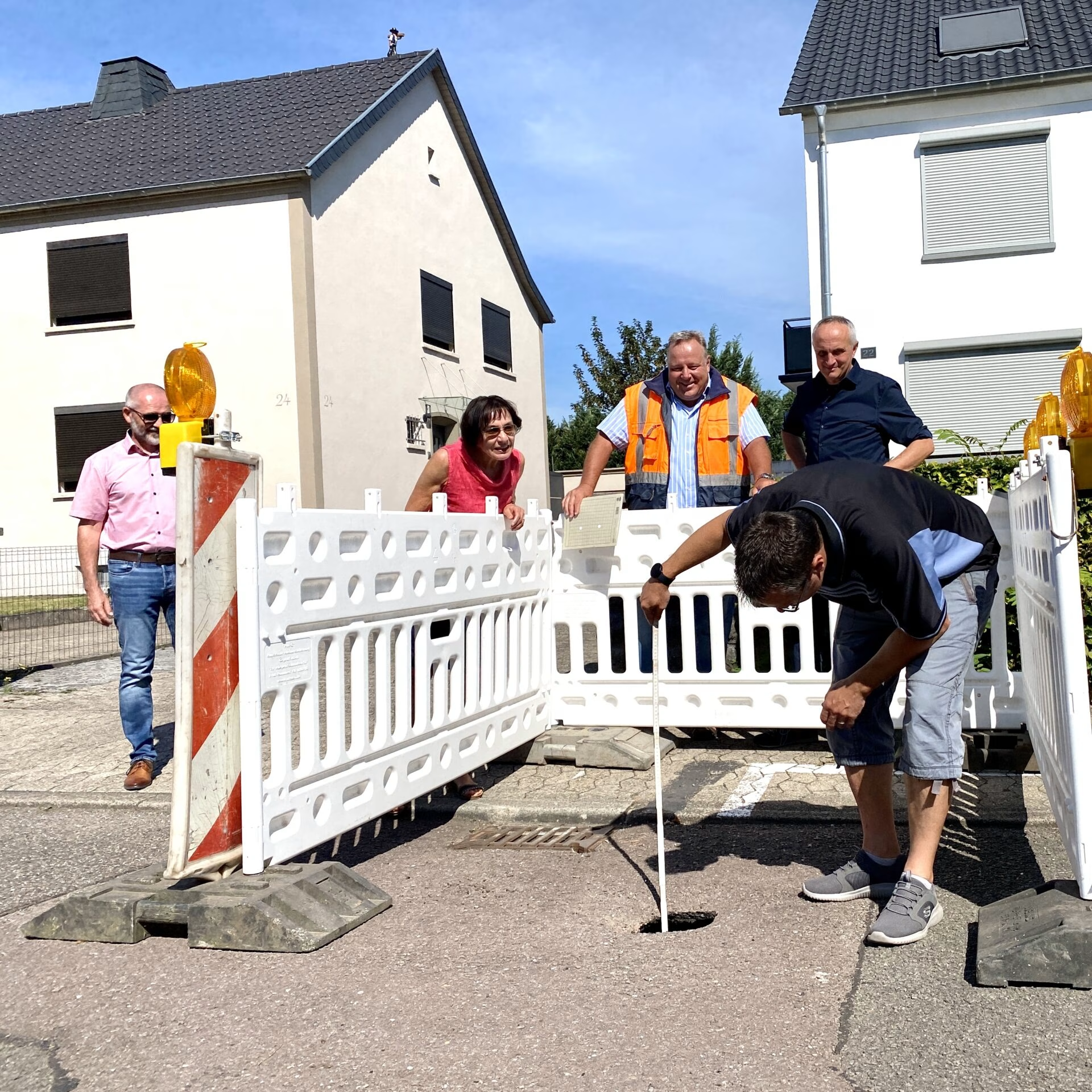
A hole in the street is not only unsightly but also very dangerous. Recently, the city administration has been receiving increasing reports of such suddenly occurring "road collapses." Thomas Diederichs from the traffic department, Christian Fettig and Marco Schmitt from the wastewater management, and Frank Model from the road construction department of the city of St. Ingbert explain how this happens and what the city is doing about it during an on-site visit.
The view falls into a hole in the road – about 30 cm in size. Beneath: a cavity. "Such collapses occur especially in heat. Then the asphalt becomes hot and cracks. When the layers underneath, mainly the gravel and sand, are washed out, the asphalt breaks and a hole forms," explains Christian Fettig. And why is the gravel washed out? "There are different reasons for this. Old pipes can break, for example, but most often the seals on the old concrete and plastic pipes become leaky or brittle. Then water escapes, washing away the sand. This means the asphalt no longer has support and breaks away."
There are 245 km of pipelines in St. Ingbert. From each house, a property connection pipe leads to the main pipeline (visible through the manhole covers in the middle of the street). “Until the mid-1990s, according to the sewage regulations, property owners were responsible for the property connection pipe up to the main sewer. Therefore, the city only carried out repairs on the main connections. Due to a change in the sewage regulations, we are now also responsible for the pipes up to the property boundary and have therefore been carrying out extensive repairs since the early 2000s,” Fettig continues. However, the pipes in the section between the main connection and the property boundary were not properly maintained for a long time. This causes the many road damages that occur especially in the summer.
Constant renovation and spontaneous repairs
„We can only respond as quickly as possible,“ explains Thomas Diederichs … and Frank Model's phone rings: „A new road collapse!“ When damage is reported, the city immediately ensures the closure and securing of the area. Afterwards, the damage is located and the repair is planned according to priority and the availability of repair companies.
To change this situation in the medium term, a new digital filming of the entire pipeline system in St. Ingbert is currently being carried out. All pipelines are being filmed, creating precise 3D views of the pipes. "Once these systematic recordings are completed, we can create a new connection register and then an updated renovation plan," says Christian Fettig enthusiastically. Currently, 18,100 property connections and 7,100 drainage connections are managed and maintained in St. Ingbert. The city's repair costs amount to about 240,000 euros per year, plus sewer shaft repairs of about 120,000 euros. All pipes and connections are continuously being renewed.
Local head Irene Kaiser casts a concerned glance at the hole in the street: "Now I understand why we have so many road collapses. When you know the cause, you might also have a bit more patience. I thank the city employees for continuously working on the renewal and at the same time promptly repairing spontaneously occurring damages as quickly as possible."
