

In 1755, the Old Church was built under the direction of the noble couple Count Friedrich Ferdinand and Countess Maria Charlotte Auguste von der Leyen, but the parish of St. Ingbert was first mentioned as early as 1264. "The Old Church is the heart of St. Ingbert," says Mayor Dr. Ulli Meyer. "When something is happening here, people meet in front of the Old Church. The 'Alt Kerch' is firmly rooted in the lives of the people of St. Ingbert – I, like many other St. Ingbert residents, got married there." The last major renovation took place several decades ago. In the meantime, the heating system was renewed, and the organ was restored, with only partial cleanings and repaintings carried out. A larger construction project had therefore become urgently necessary to prevent further decay.
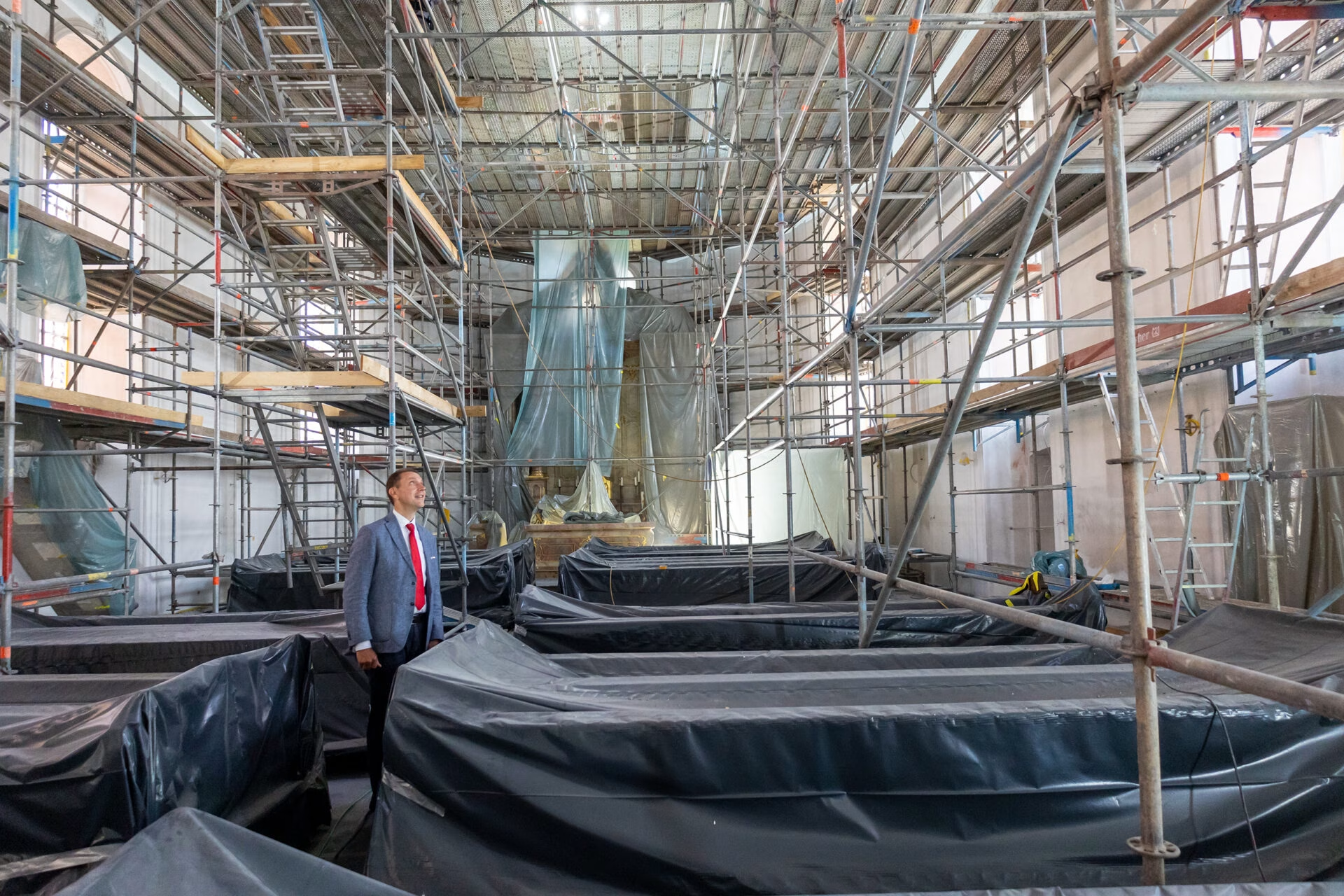
Thus, the church doors were closed in February 2022. Since then, a huge scaffolding has filled almost the entire interior, and the original pews are wrapped in black foil. What has happened inside the church so far? Architect Tim Schwager provides information during a site visit: "We have dismantled the last four rows of pews and stored them in a manner appropriate for historical preservation. This creates a spacious meeting area for the faithful and all citizens. In addition, the collection box was removed; it will be replaced by a new one." The soot development from the open candles had caused the surrounding walls to turn black. Now, a collection box is being installed where the still real candles are placed in small compartments equipped with an exhaust system, solving the problem of soot deposits.
Two young restorers are working on the four confessionals: “The chairs are carefully cleaned and restored. They will look the same in shape and color as before, but much fresher and clearer.” A true Sisyphean task! Shape and color were also an issue with the ceiling and walls. “We had a long discussion about the colors. The ceiling and walls were cleaned, primed, and are now being painted in the same colors as before in a way that preserves the partly uneven texture,” explains the architect. The high altar, wall sculptures, and figures were also cleaned and restored; they will regain their original positions with a fresh shine. The old benches will be equipped with back cushions and, except for four rows, will be set up as before. Only the large wall cross has been removed and, in coordination with the parish, will no longer be installed. “Visitors to the church won’t notice this,” says Tim Schwager. “The overall impression of a clean, well-maintained, and radiant church will prevail.” The mayor confirms this: “The original furnishings from the 18th century have always changed. But the church will always remain part of St. Ingbert’s identity.” District chief Irene Kaiser is also looking forward to the reopening and emphasizes that the church is barrier-free, making it a meeting place equally accessible to people with and without disabilities.
Although the church still looks like a major construction site, architect Tim Schwager is confident: "By the end of July / beginning of August, we want to have the major work completed. Follow-up and finishing touches can then be carried out once the church is open to the public again."
