

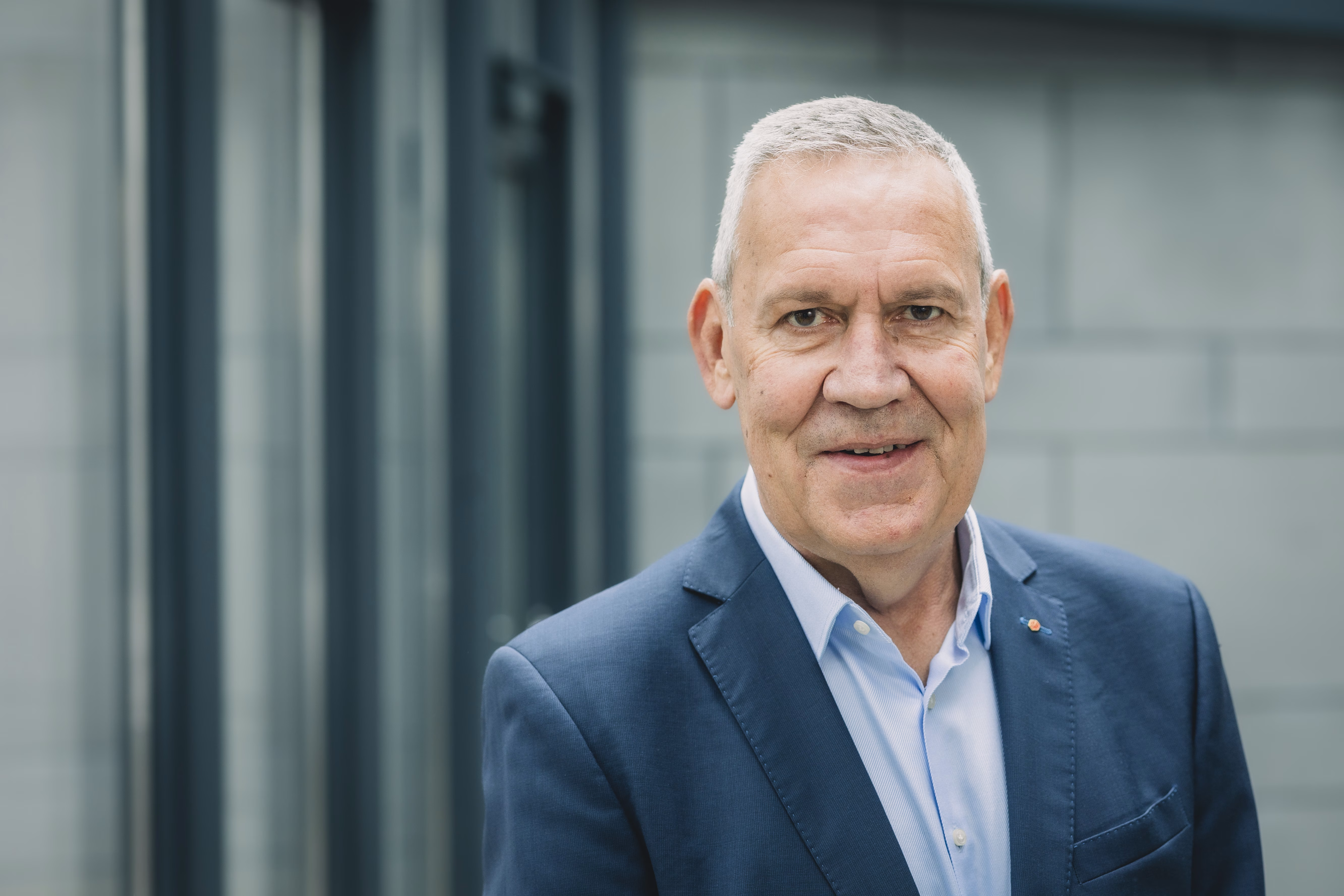

IG BAU Chief Feiger: "Boldly tackle reforms in Germany"
5.1 million baby boomers face housing poverty –
with 800 euros pension and less per month
Germany is facing massive housing poverty among pensioners. This warning was issued by the federal chairman of the Industrial Union for Construction, Agriculture and Environment, IG BAU chief Robert Feiger. "Around 5.1 million baby boomers will receive less than 800 euros per month from the statutory pension. This amounts to about 40 percent of the baby-boom cohorts across the republic who will retire from this year until 2036," says Robert Feiger. The IG BAU chief refers to a recent calculation made by the Pestel Institute for the union.
“With such a low pension, many affected individuals will be permanently dependent on state assistance. At the latest, rent will push a large portion of the baby boomers into housing poverty. The gap between the pension and rising housing costs – meaning rent, heating, and additional costs – will continue to widen for the upcoming generation of retirees,” says Robert Feiger. The risk of slipping into basic income support as a retiree has already increased by around 70 percent over the past 15 years: In 2010, only 2.5 percent of all retirees relied on state basic income support. Today, their share is already at 4.3 percent. The IG BAU federal chairman refers to the analysis by the Pestel Institute.
In view of these figures, the statutory pension system must be urgently strengthened. “The statutory pension must be sufficient to live on. And housing must not drive people into poverty – neither the skilled construction worker nor the building cleaner. These are two principles that the federal government must absolutely adhere to in its reforms now. Otherwise, the welfare state and thus social peace in Germany will collapse,” says Robert Feiger.
For the federal chairman of the IG BAU, this means: "Pensions must increase at the lower end. In contrast, high pensions can decrease." This is justified not least because people with higher incomes and thus better pensions also have a higher life expectancy. Furthermore, the upcoming pension reform should not rule out using high capital incomes – for example through dividends or interest – to finance the statutory pension.
Many baby boomers have worked for low wages and had to endure periods of unemployment. "Neither was their choice. The consequence of this is old-age poverty. This is exactly what the federal government must now prevent for the baby boomers and future generations of retirees. We must not allow people to find themselves in poverty after their working life and then turn away from the state and democracy out of frustration," warns Feiger.
The "number one social issue" is affordable housing. "Germany is lacking 1.4 million apartments. Rents continue to rise. And even now, after the new federal government has been in office for a year, there is little sign of the promised 'build, build, build'," said Robert Feiger. Only by significantly increasing the construction of social and affordable housing can the rent spiral be prevented from rising further.
At the same time, the key to success in boosting the economy lies in residential construction. IG BAU leader Feiger calls on the federal government to implement a "full economic stimulus program for residential construction." Feiger appeals to the CDU/CSU and SPD: "If economic growth is the 'existential question of the coalition,' then the fate of the coalition depends on the construction of new housing. Because every seventh euro of the overall economic gross value added and every seventh job are linked to the residential construction sector." Furthermore, affordable housing costs would also relieve the wallets of millions of workers in Germany. This would indirectly strengthen private consumption as well.
Furthermore, affordable housing is a prerequisite for functioning labor markets – for the immigration of urgently needed skilled workers. "Skilled workers will only come if they can also afford to live here. The construction of new housing is therefore crucially important for the economic strength of Germany. And only with the skilled workers arriving today can the pensions be paid tomorrow," says the union chairman.
Robert Feiger advocates for a "decisive crackdown" in the upcoming reforms. "The coalition must have the courage to challenge so-called taboos. It can only succeed now and with this coalition to implement the urgently needed reforms for Germany. This must happen by the next federal election. What must not happen is that the political extremes become even stronger," said Feiger.
Pension Data
for the federal government and all federal states
Calculations by the Pestel Institute
for the Industrial Union of Building, Agriculture and Environment | IG BAU

Notes
§Contact to Matthias Günther | Head of the Pestel Institute:
Industrial Union
Construction-Agriculture-Environment
Federal Executive Board – Press Office
Olof-Palme-Street 35
60439 Frankfurt am Main
Responsible:
Frank Tekkiliç
Phone 069 95737-135
Mobile 0151 1755 3706
Dear recipient,
since you have provided us with your personal data (name and email address) through newsletter registration, membership, partnership, speech contribution, event registration, seminar registration, or direct contact, we assume that you have given us your consent to process your data. In individual cases, we have included you in the electronic address list based on your professional position and researched the data from publicly accessible sources. If you wish to object to the storage of your data and thus the receipt of emails from us or to withdraw your consent, please reply to this email with the subject “
