

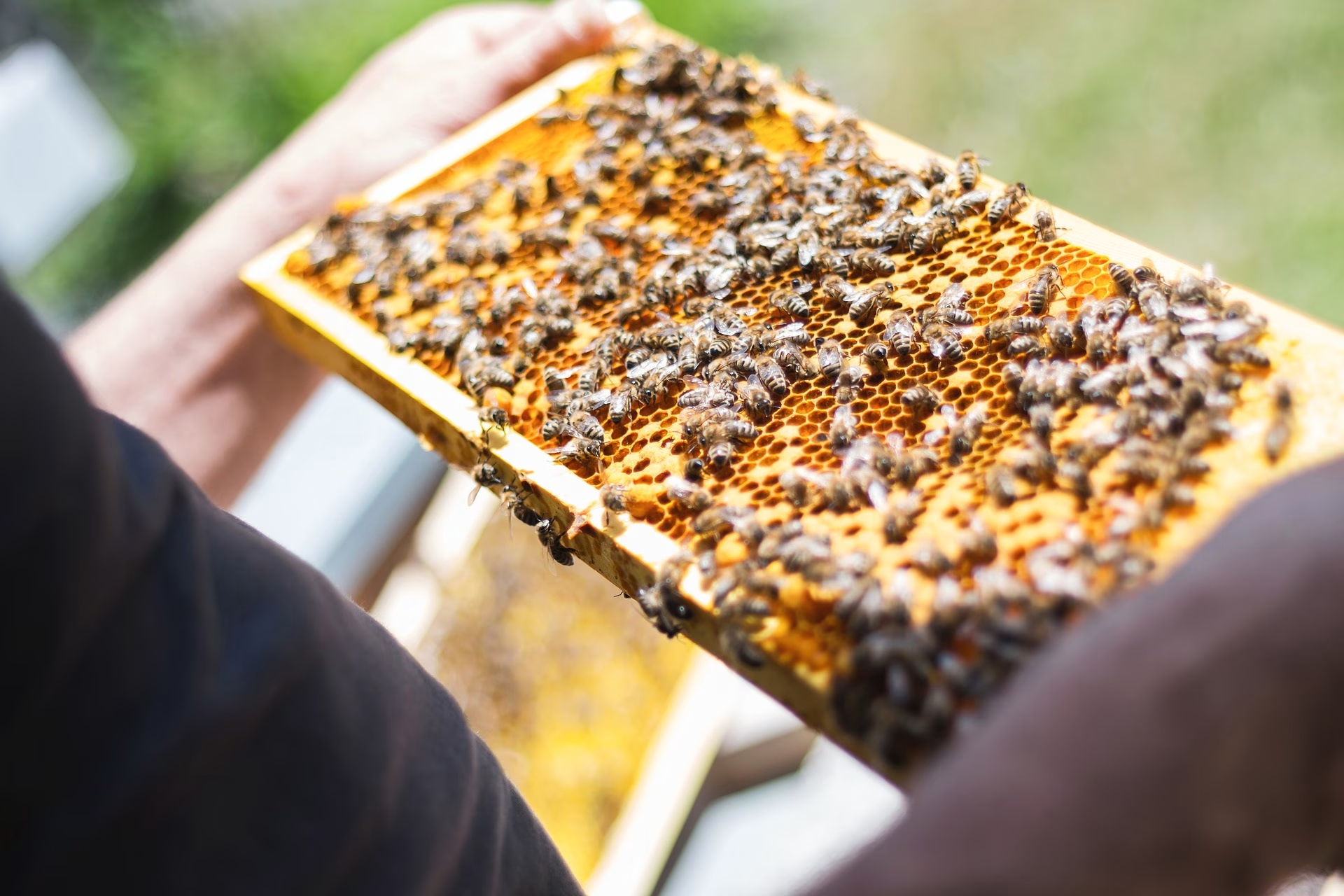
The biology of the honeybee is well known; there are numerous books, documentaries, and presentations by beekeepers and apiarists on this topic. The life of the domesticated honeybee alone is fascinating enough, and many who are interested in its life decide to become beekeepers to study these animals more closely. But what about wild bees, the wild relatives of the honeybee? About half (48%) of the wild bee species in Germany are considered endangered or have already become extinct. Only about 37% are considered not at risk. The rest are either extremely rare (5%), on the warning list (8%), or cannot be classified due to insufficient data (3%) (Westrich et al. 2011).
Wild bees depend on a variety of wild plants, from whose flowers they collect nectar and pollen while simultaneously pollinating them. In addition, they need (among other things) open soil patches, dead wood, edges of cliffs or steep walls, and suitable nesting material to build their nests. Species protection is possible with a few simple measures and helps the approximately 580 wild bee species that live in Germany. You will be surprised which native plants are vital for wild bees and why a natural garden can become a habitat for many other animal species.
If you want to learn where bumblebees live and whether you should put up an insect hotel in your garden to help wild bees, this lecture will enrich you.
About the speaker:
Julia Michely studied biology in Freiburg im Breisgau and earned her doctorate at the University of Saarland on the topic of memory formation in the honeybee (Apis mellifera). Since 2019, she has been the state chairwoman of NABU (Nature and Biodiversity Conservation Union), Saarland state association.
She is interested in the life of wild bees, gives lectures and workshops on wild bees and other species conservation topics. She writes scientific articles, conducts species identification courses on wild bees for DELATTINIA (Natural History Society of Saarland), and is the author of the "Red List" for bees.
Coordination: Prof. Dr. Horst Altgeld | Contact: horst.altgeld@mintcampus.de
