

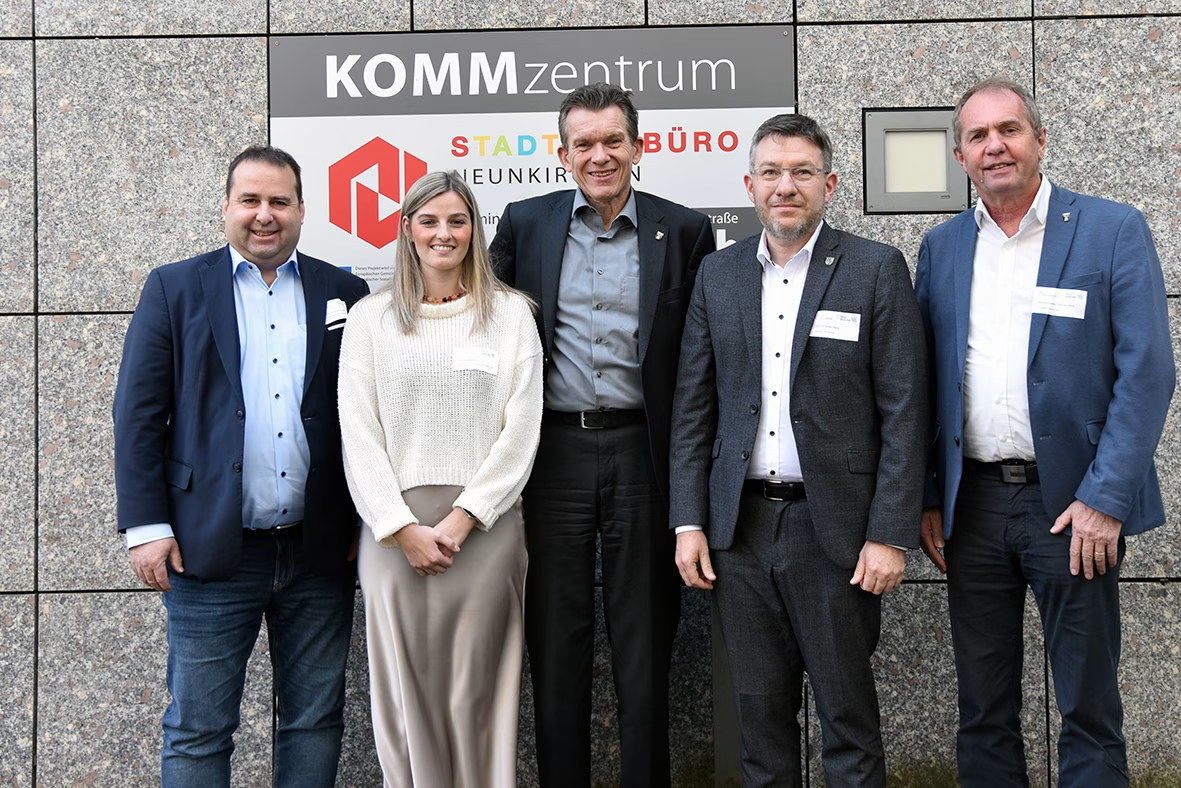
Social Minister Dr. Magnus Jung: "The events and crises of recent years have further exacerbated social inequality. This has led to the formation of neighborhoods that are particularly threatened by or affected by poverty. The city of Neunkirchen is still confronted with the consequences of structural change and exhibits various poverty issues. To combat poverty structurally, a holistic approach is needed that increasingly focuses on preventive measures and structural changes to prevent poverty from becoming further entrenched. Today, we have addressed this innovative and unique approach not only across departments but also across levels and among stakeholders. Initial strategies have been developed on how the Neunkirchen neighborhood should be transformed in the coming years so that all citizens feel comfortable and continue to enjoy living in Neunkirchen."
District Administrator Sören Meng: "Poverty is not just a question of lacking financial resources – it often affects participation in social life, opportunities for education, health, and personal development. This makes it closely linked to the future viability of our region. By starting directly in the neighborhoods, we create opportunities for concrete, everyday support and strengthen the local community."
"Neunkirchen has always been a city with a social conscience: We leave no one behind here. The neighborhood-based poverty reduction will connect all relevant actors. Together, we can succeed in breaking the cycles of social inequality," said Mayor Jörg Aumann.
Under the motto "Future in the neighborhood – creating perspectives together," the state, the district, and the district town emphasized their joint project and strong networking to achieve the goals in the process of neighborhood-based poverty reduction. Additionally, the local stakeholders were officially integrated into the process once again and informed about the project during the kickoff event.
At the kickoff event, interim results of the social space analysis, conducted by htw saar, were presented for the first time. Based on these results as well as conversations between the network manager of the Perspective Quarter Neunkirchen, Celine Steigner, and many institutions, service providers, and residents, initial requirements for the quarter were already identified. Within the framework of a think tank, results, solutions, and action strategies were developed together with local professionals and experts from the state government, the district, and the county town. The workshops are now to be established as permanent working groups beyond the kickoff event in order to collaboratively develop theme- and quarter-specific objectives in the coming months.
Background Information
The Saarland state government, led by the Ministry of Labour, Social Affairs, Women and Health, pursues the approach of neighborhood-based poverty reduction: an interdepartmental, inter-level, and cross-actor approach that represents an innovative and unique model. This approach pools all resources and ensures networking between the existing civil actors, external experts from science and practice, as well as the affected population with the Saarland state government and other political levels. The focus is on developing goal-oriented strategies and building sustainable structures to initiate noticeable development in the neighborhoods, offer the affected people on-site a clear perspective, and be able to effect turning points.
