

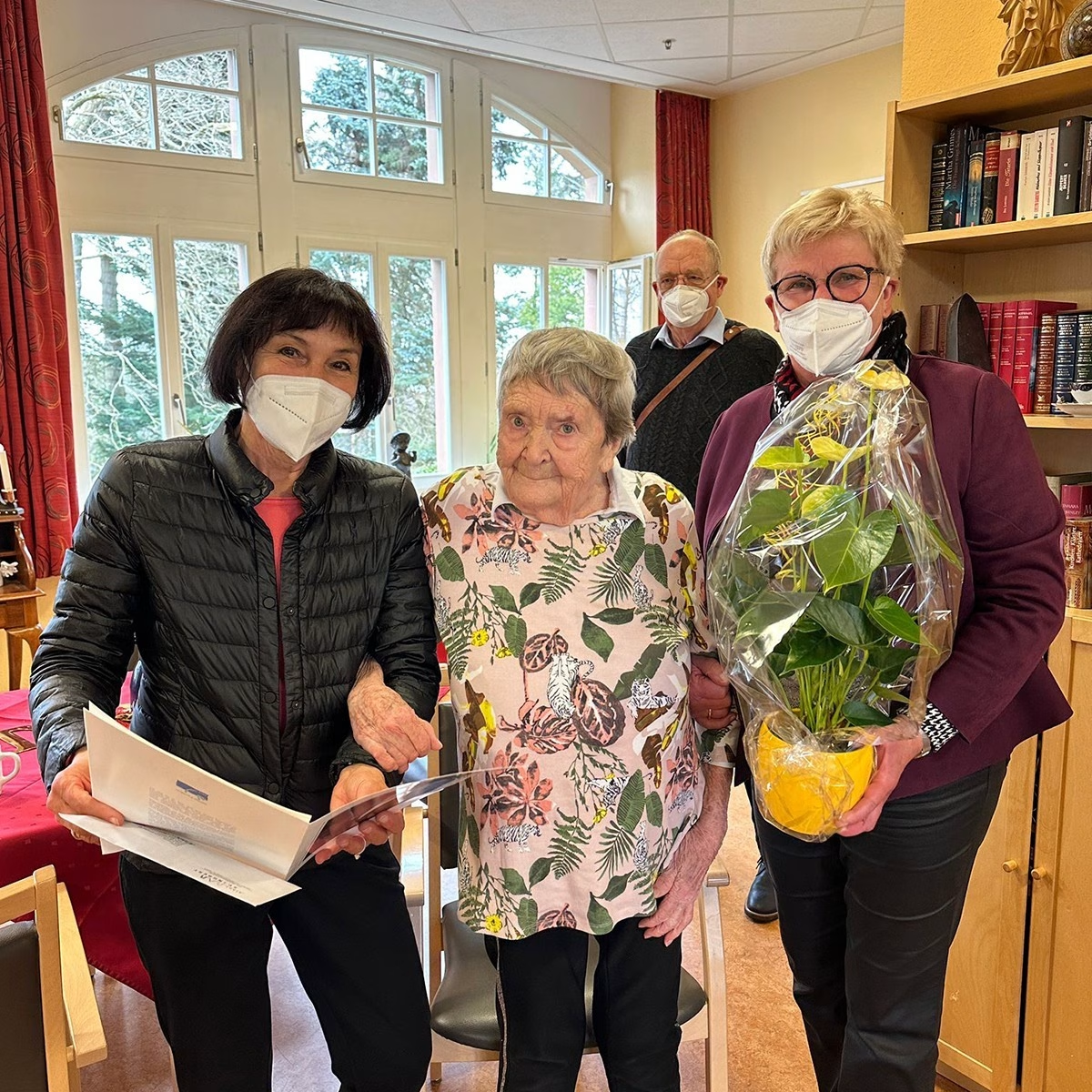
“But now I can do whatever I want again,” she added during a conversation a few days after her special day. And she really has a lot to do: sorting a life full of ups and downs, people, memories, and places. “I always wrote down what was important to me. Today I have a framework, a kind of ladder, that helps me find my way,” explained the incredibly agile lady with the friendly smile. And she was already on her feet, gathering her photos, books, and pictures through which she tells stories from her life.
Born on March 21, 1923, in Hamburg, her later homes included Berlin, Wiesbaden, Hamburg again, Mexico, St. Ingbert-Reichenbrunn, and now the Fidelis Senior Residence. She has four children, one of whom passed away after 21 days. The remaining three live today in Mexico, Scotland, and Paderborn – not exactly around the corner. "But we talk on the phone very often; it's almost like seeing each other," Mrs. Hasse reflects. She had not intended to live to 100 years old, "and I have had several chances to say goodbye," she conceded. For example, during the bombing raid on Dresden on February 13, 1945, when she happened to be in the city.
Interpreter was her career aspiration after graduating from high school, but everything turned out differently. "I met my school friend Moritz Hasse again and fell in love with him," she recalls. "Then he asked me, 'Why don't we get married?'" The young couple followed the father-in-law to Mexico. They founded an orphanage, which had to be closed again after a few years. "After that began perhaps the happiest time in my life," Ilse Hasse said. The family lived in a house with a large garden where the children could play. Ilse was interested in many topics and read a lot. She carved out a place for herself at the Astronomical Institute of the University of Mexico, where she caught up on a lot of learning material and worked her way up to assistant. She worked at the university for 27 years; during this time, her husband passed away. A few years later, she rediscovered her love for painting, quit her job, and lived off painting.
Their texts and images are living testimonies of their eventful life. In 2009, she returned to Germany, lived for several years in Reichenbrunn, and since 2018 in the Fidelishaus. Here, she sorts her works and memories every day. "I am not a living history book, but a book of stories," she explained. And with her stories in her head and heart, she dares to look ahead: "When I have organized my photos, I might make a book or something else out of them." – and her eyes sparkled.
