

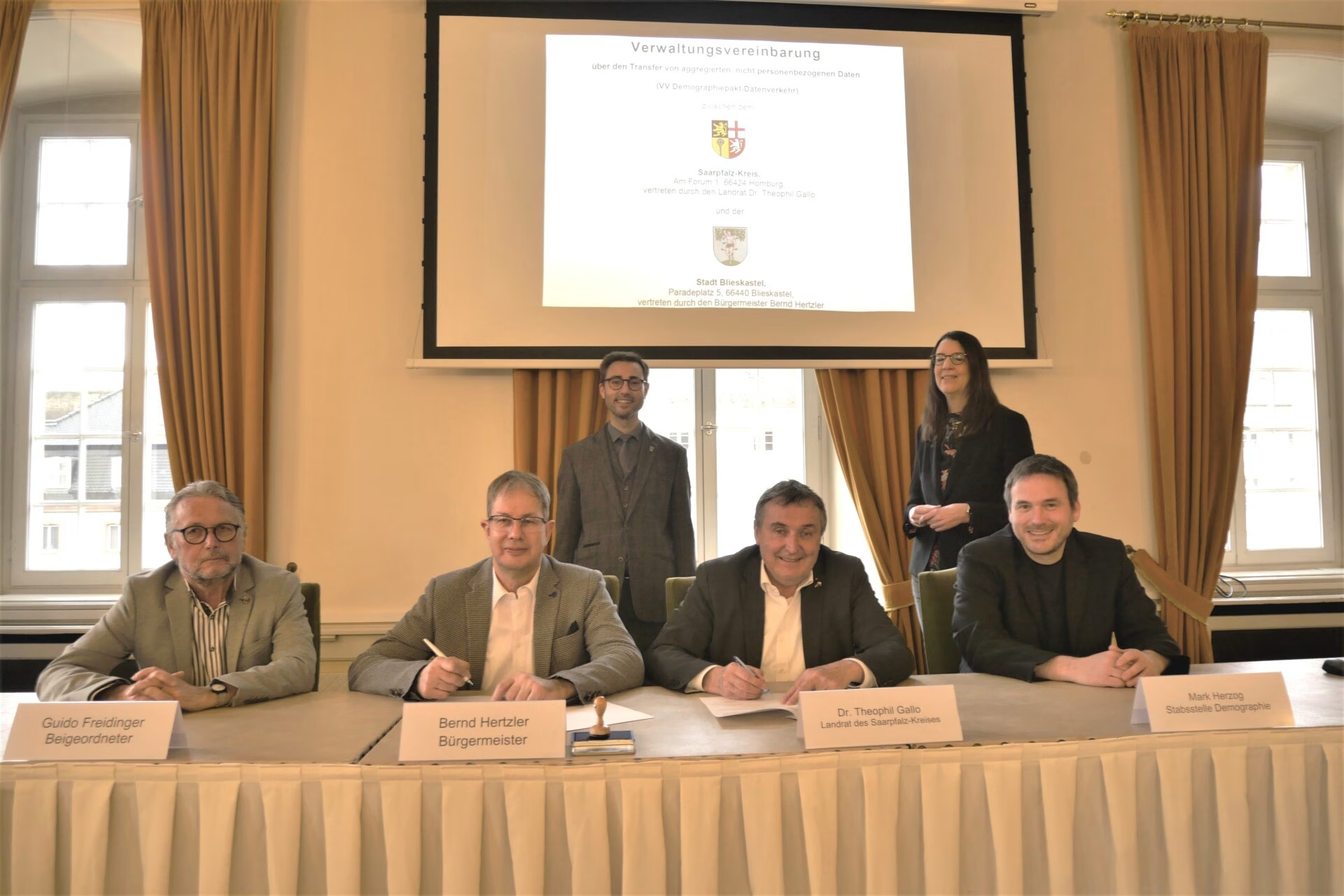
“This continues and intensifies the cooperation in the district-wide demographic pact, which was concluded in February 2015 by the municipalities belonging to the Saarpfalz district. Blieskastel serves as a model location, demonstrating the advantages of collaboration between the city and the district,” emphasizes District Administrator Dr. Theophil Gallo.
What does this look like in practice? As a first step, the Saarpfalz district has established a segregated statistics office. Segregated means a strict separation of the statistics office from other municipal administrative units and tasks, in order to practically implement the protection of particularly sensitive data and to prevent unauthorized access.
Demographic development is a crucial parameter when it comes to determining the specific demand for places, for example in educational institutions. The analysis of changes in the age structure and population composition helps to understand the direction in which a society is developing and which measures will be necessary in the future to support a certain development or to counteract it. Considered are the age structure of the population, the development of birth and death rates, migration to and from Germany, as well as the quantitative ratio of genders. The changes that arise here have an impact on the labor market, the sales market, and the healthcare market. For the analyses, fundamentally high-quality population data is required.
The city of Blieskastel therefore transmits population data to the isolated statistical office of the Saarpfalz district in a data protection-compliant procedure. This office then evaluates the data for school development and daycare demand planning as well as for planning afternoon care at schools (voluntary all-day school). In return, the statistical office of the Saarpfalz district provides the city of Blieskastel with these evaluations or data analyses for its municipal planning tasks.
“Our city already collaborates intermunicipally with other communities as well as the district in many areas. With the current cooperation agreement, we are creating the conditions to work together with the district to establish a foundation that enables us to recognize demographic developments early on and actively shape societal and demographic change. The starting point and concrete reason is to develop forward-looking preschool and school development planning. In doing so, the existing data and resources of the city and the Saarpfalz district will be interconnected, efficient processing structures created, and ultimately synergy effects achieved,” explains Mayor Bernd Hertzler.
The city councilor responsible for social affairs in Blieskastel, Guido Freidinger, adds: "In the medium and long term, we will certainly not limit ourselves to the area of preschool and school development planning, but also use the opportunities created within the framework of the cooperation agreement in other socially important areas, such as senior and disability work as well as the development of rural areas."
The district administrator and mayor thank Guido Freidinger, who was able to set a forward-looking direction here as the originator of the idea, Mark Herzog, head of the staff unit for shaping societal change at the district, and his employee Katrin Konrath, as well as all other participating staff from both offices, especially from the IT departments.
“The administrative agreement concluded today between the city of Blieskastel and the Saarpfalz district is an important step into the future and towards needs-based planning of social infrastructure in the district and the city,” the two administrative heads conclude.
