

This guiding principle from the Child and Youth Welfare Act is put into practice by the District Youth Office with a wide range of services. These include, among others, assistance for upbringing and integration support for children and adolescents with mental disabilities or those at risk of developing mental disabilities. These are usually very costly for the district. In addition, there are also preventive services offered by the Saarpfalz district, which in most cases are low-threshold and free of charge for the residents of the Saarpfalz district. Overall, the budget for 2023 allocates over 60 million euros for the work of the Youth Office.
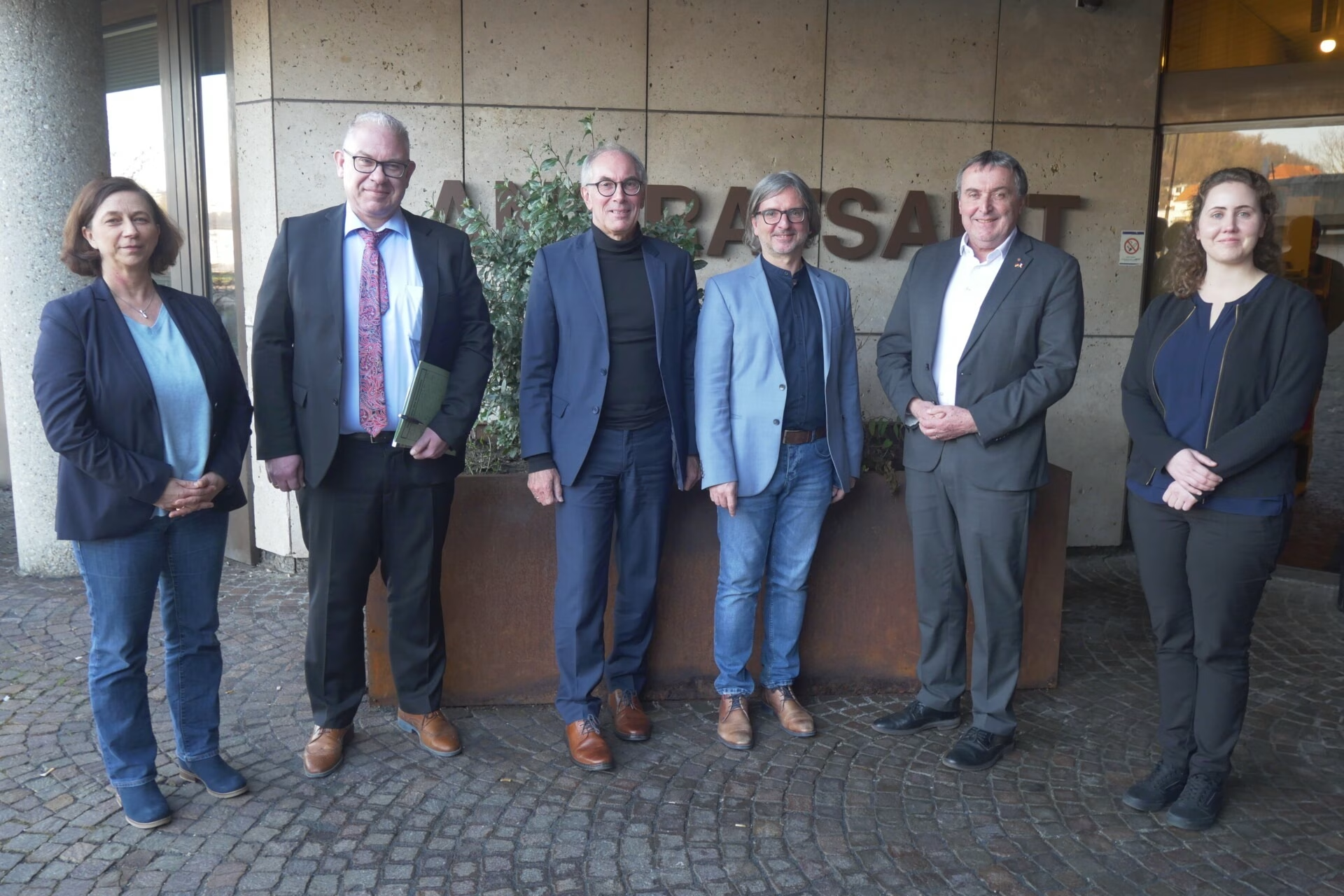
A realistic assessment of cost developments should, among other things, be derived by District Administrator Dr. Theophil Gallo from statistical surveys conducted by the Institute for Social Pedagogical Research Mainz (ism) gGmbH. The institute regularly documents the expenditures for child and youth welfare services in the Saarpfalz district and highlights comparable trends in Saarland. For the presentation of the surveys by ism Managing Director Heinz Müller, District Administrator Dr. Theophil Gallo invited, in addition to Youth Welfare Office Director Cornelia Kazakob-Marsollek, the State Secretary of Finance and Science, Wolfgang Förster, who was accompanied by Dr. Christian Pfeil (Ministry of Finance), to gain an in-depth understanding of the concrete interrelationships with regard to the major cost blocks in the budgets of the districts.
Basically, there has never been as much activity in child and youth welfare as there is currently, stated Heinz Müller, an experienced expert, and he predicted cost increases also for assistance with upbringing. The records showed that the Saarpfalz district, through its sophisticated prevention program, which is based on intensive engagement with families in the Saarpfalz district and has been established over many years, has consequently already led to cost savings. "It pays off that we provide people with low-threshold access to assistance, for example in our family support centers. The earlier we intervene, the more we avoid long de-escalation phases that cost a lot of time and money," said Cornelia Kazakob-Marsollek. District Administrator Dr. Theophil Gallo added: "We must continue to ensure the good positioning and equipment of our youth welfare office. Structural changes through politics will likely be unavoidable for this. It is essential to meet the implementation requirements related to new legal regulations and, considering the shortage of skilled workers, also in child and youth welfare in the future."
