

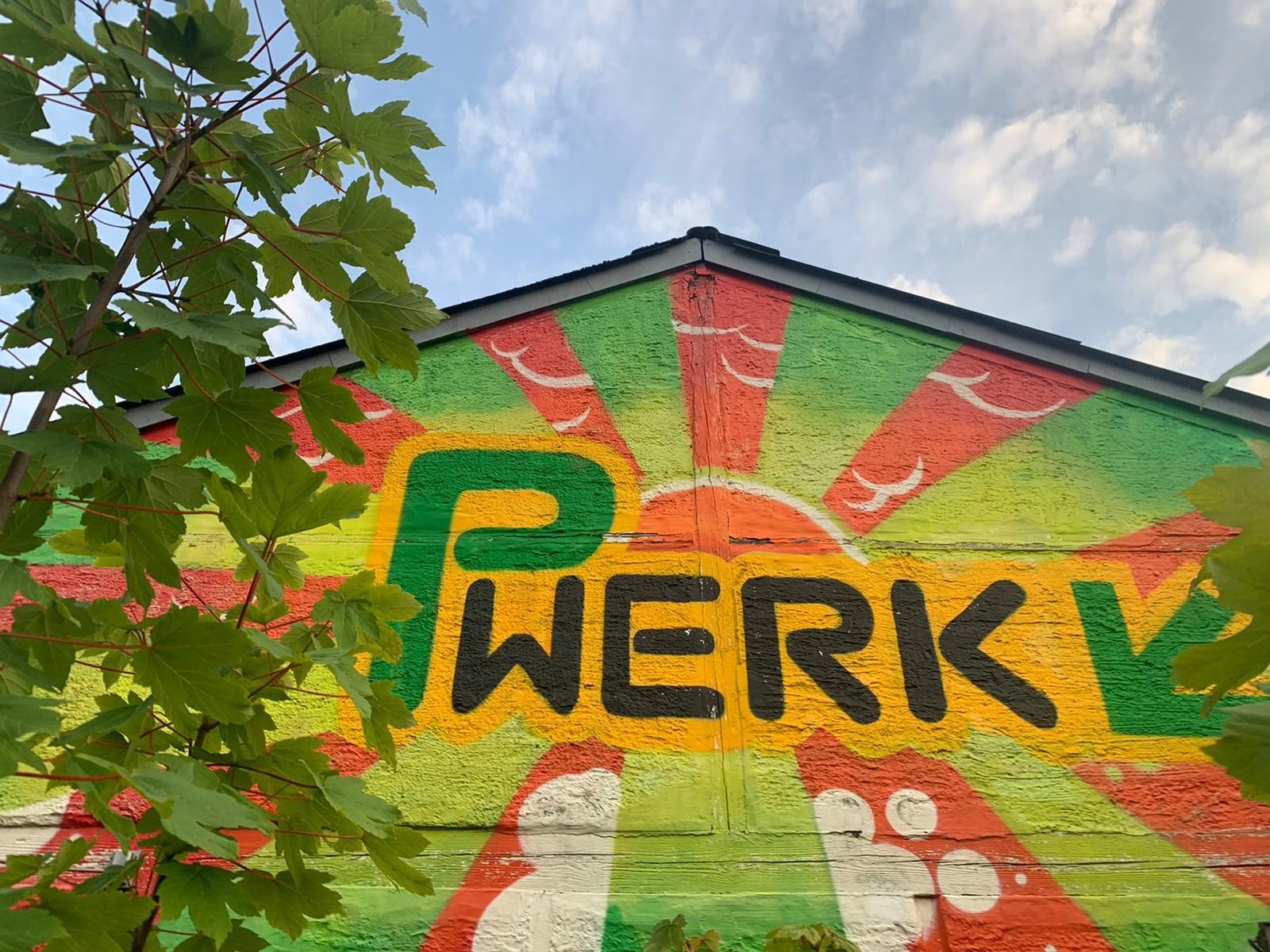
It has now been just over 25 years since the city provided the young people of Blieskastel with their own space for a self-managed youth center. With the support of the Burbach Training Center (now ZBB), the city at that time renovated the canteen building of the former post workshop dating back to 1952 and agreed on its use in a usage contract with the Association Youth Center in Self-Administration P-Werk. This usage contract foresees a rent-free use but requires the youth center association to cover the ongoing energy and other operating costs. The young people generate these operating costs through income from events and beverage sales.
High need for renovation
In the meantime, particularly the older part of the building (café), constructed using a wooden frame and single glazing, no longer meets even remotely current energy standards, which is why heating costs have continuously increased. In 2018 alone, the association had to pay over €3,000 for more than 33,000 kilowatt-hours of electricity and gas energy. Although, similar to the waiver of usage fees for associations during the pandemic, the JUZ was also exempted from reimbursing ancillary costs, a local engineering firm from Blieskastel was commissioned to examine the renovation effort and the economic viability of a building refurbishment to clarify the medium- and long-term conditions for continued use. In its summary, the expert concludes that "... the building is in very poor structural condition" and a complete renovation is necessary. The costs of a partial renovation are estimated (as of spring 2021) at around €1.15 million gross, while the cost of a new building of comparable size is estimated at €1.31 million.
Perspectives for the future developed together
The results of the report were explained to the board of the youth center association by Vera Weyer, the commissioner responsible for children and youth, and Guido Freidinger, the deputy mayor responsible for social affairs. In an "ideas lab" held last August, the association's youth explored various courses of action. Due to location advantages, they prefer a partial renovation of the café area and retention of the (structurally better) event room instead of a total renovation on-site (closure during rebuilding) or a complete new build elsewhere. Meanwhile, the administration has commissioned a cost estimate for this partial renovation variant as a supplement to the original mandate. "For the realization of this option, the appropriate funds would need to be allocated in the city's budget over the next few years," said the deputy mayor. "To ensure the continued operation of the youth center until then, we first restored the operational safety of the existing building at the beginning of the year for around €14,000. Furthermore, a proposal to amend the usage contract will be presented to the city council this autumn, whereby due to the poor overall energy condition of the building, the association will only be required to cover one third of the ancillary costs themselves. Lastly, it was agreed with the board that – in order to contribute to gas savings – the café will no longer be used starting with the upcoming heating period. The JUZ activities will then be limited to the event room, which is now also equipped with a ventilation system. We would like to expressly thank Lara Enslin, who represents the association’s board, and Wiebke Klein from JUZ United for the constructive discussions," concluded the deputy mayor.
