

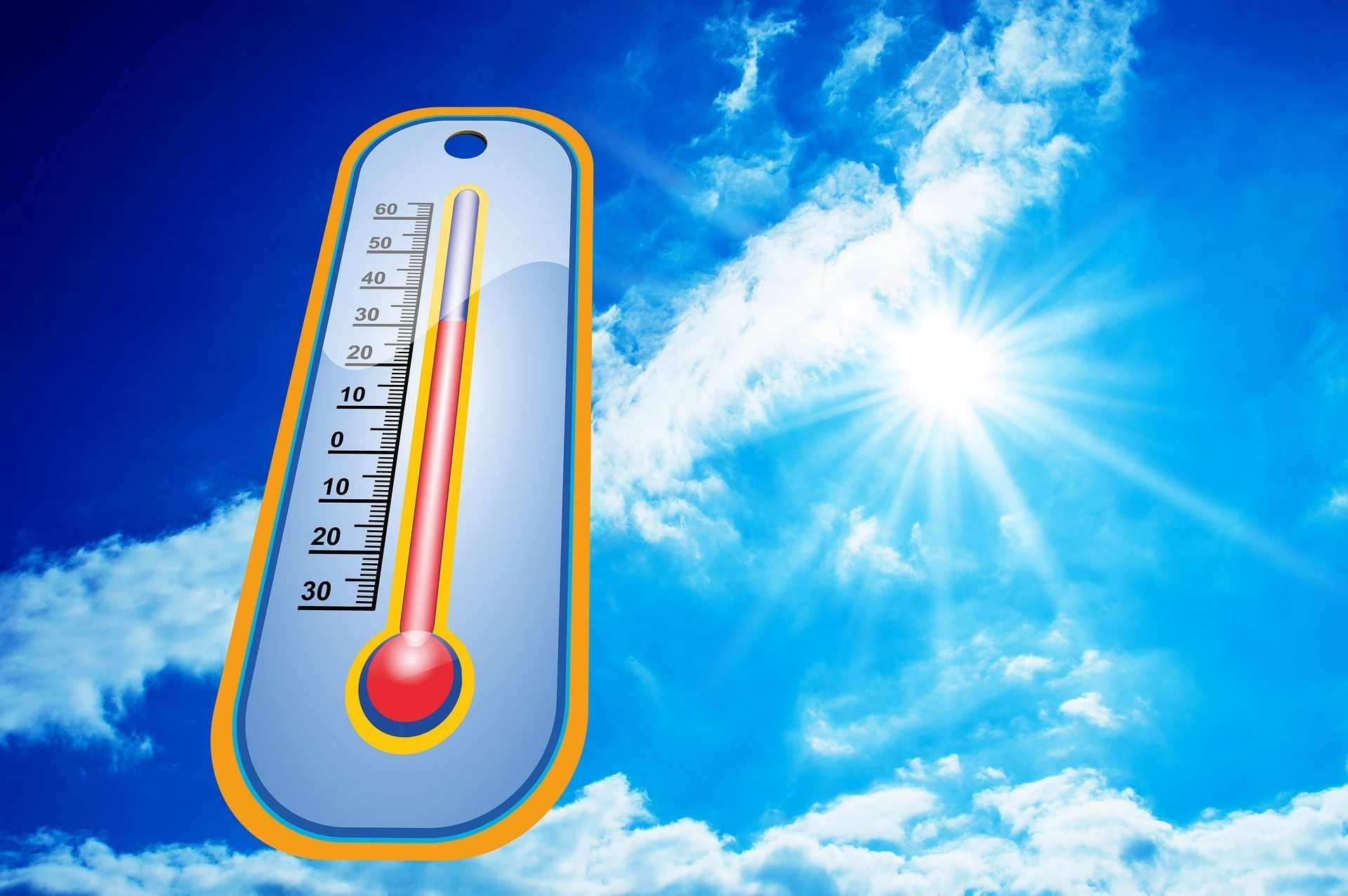
The Health Department of the Saarpfalz district has developed a heat etiquette guide and offers it as a download to citizens at www.saarpfalz-kreis.de/leben-soziales-gesundheit/gesundheit/hitzeschutzkonzept-und-hitzeknigge.
The reason for this is obvious: Due to climate change, there are increasingly more hot days (>30 degrees Celsius) or prolonged heat periods in the summer months in the Saarpfalz district, during which the temperature often does not drop below 20 degrees Celsius at night (tropical nights). At first glance, this sounds like more sunny days with blue skies and perfect weather for swimming, but these high temperatures, lasting longer than before, can seriously affect the human body. For example, the severe heatwaves in the summers of 2003, 2010, 2015, and 2019 in Europe and Germany caused numerous deaths. Climate models show that these heat extremes will continue to increase in the future.
The heat etiquette for the Saarpfalz district contains practical behavioral tips and points out the main dangers of heat. The information compiled by the Federal Environment Agency during the "Shade Provider" campaign has been supplemented with local heat protection information from the Saarpfalz district.
„That it can be unbearably hot for people here on certain days cannot be denied. Therefore, I especially recommend the heat etiquette for the Saarpfalz district. Please take good care of yourself, especially during the current heat period, and if possible, keep an eye on your surroundings, particularly older people who are especially affected by these temperatures and may need support. Use the various information offers and please take precautions to protect yourself,“ addresses District Administrator Dr. Theophil Gallo directly to the citizens.
The health department also recommends following the weather conditions provided by the German Weather Service, which continuously updates on current heat warnings, and adhering to the measures specified in the heat protection guidelines when temperatures become too high.
