

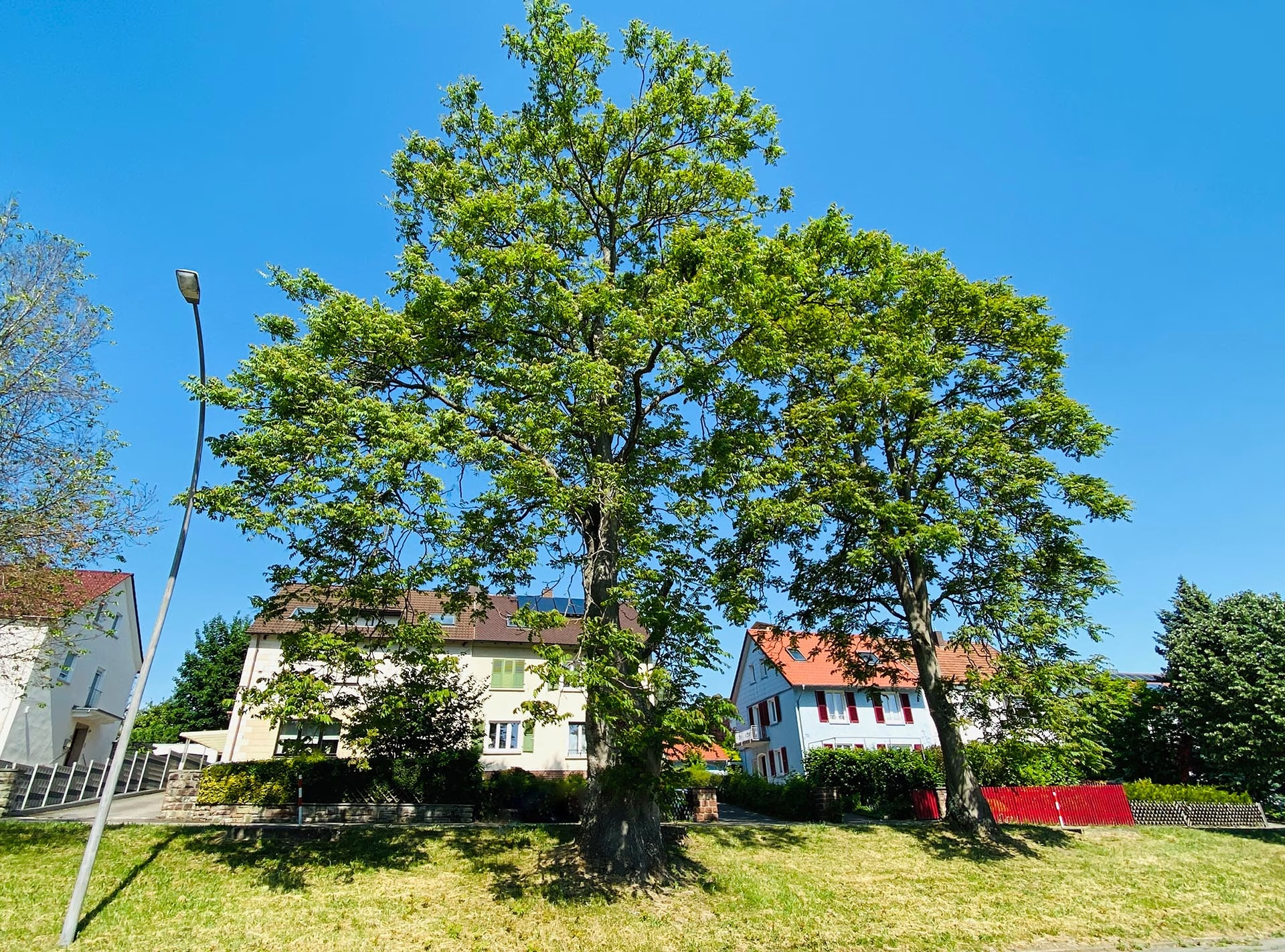
At the beginning of May, the tree expert Peter Klug was a guest in St. Ingbert, and it was pure coincidence that on his way home towards the highway on Ensheimer Street, he discovered one of the most colossal Ailanthus trees in Germany. Of course, he immediately stopped to measure the tree. To his great astonishment, he found that it had the largest trunk diameter in Germany! Perhaps it was not coincidence after all, but simply divine intervention…
Now our magnificent specimen from St. Ingbert, with a trunk circumference of 4.80 m, ranks first on the worldwide "Monumental Trees" list in the category "Tree of Heaven." And worldwide, there are only three trees that are "thicker." One in the United States with 4.88 m, another in Spain with 5 m, and a specimen in Austria with 5.50 m.
The name "Paradise Tree" is due to the tree's rapid growth. It grows up to four meters on average per year. This makes the tree shoot up "to the gods" faster than any other tree in Europe.
Bees are attracted to its peculiarly scented flowers
Originally native to China, the tree of heaven remains unfazed by drought summers even in our regions. In times of climate change, it is actually an ideal "street tree." If you cut its trunk, it simply sprouts again unabashedly. For most insects it is uninteresting, but bees are attracted to its strangely scented flowers and produce especially aromatic honey from its nectar. With its huge, exotically appearing leaves, it undeniably looks attractive.
Take a moment to consciously notice this magnificent tree on Ensheimer Street, near property number 72, because it certainly deserves it—our giant among the phoenix trees!
Here is the list of giant trees: https://t1p.de/g1vpp
