

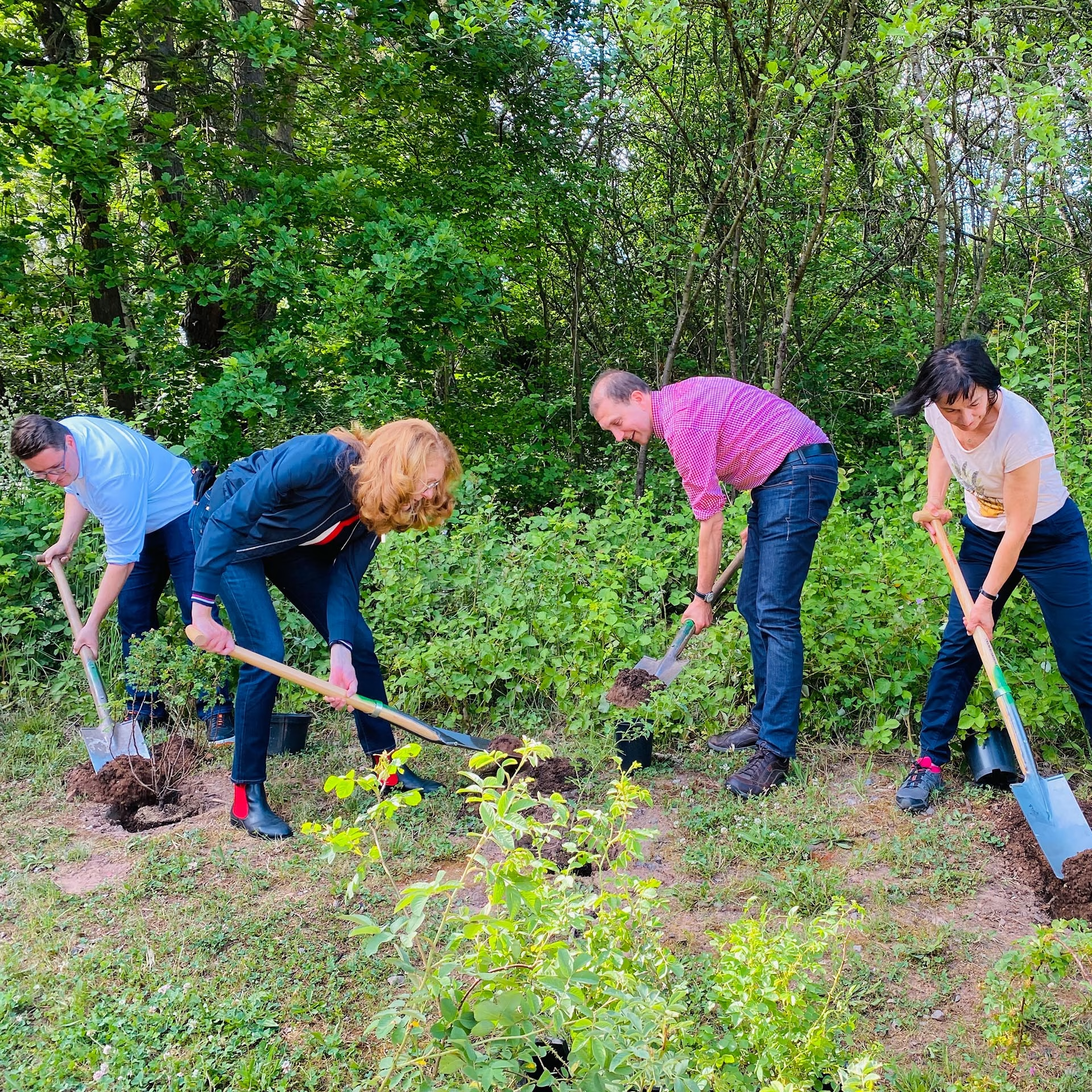
Wild roses for the swamp meadow – biodiversity in St. Ingbert
“In May 2032, in about 10 years, a wild rose hedge will be blooming at Pfuhlwiese, which people can enjoy, and 115 insect species, 27 bird species, as well as 27 small mammals will find a habitat,” cites the city’s sustainability officer, Claus Günther, from a study. The idea to plant wild roses at the pétanque court on Betzentalstraße was proposed by him and his deputy Björn Dettenhofer to the "Pfuhlwiese Citizens' Initiative." “And the local families have already collected materials to build insect hotels for the meadow with the children,” adds local council member Sandra Woll from the Citizens' Initiative.
The planting event took place on the occasion of the International Day for Biological Diversity, which the United Nations calls for annually. It serves as a reminder of the goals of the namesake convention: the conservation of biological diversity, the sustainable use of its components, and the fair and equitable sharing of benefits arising from the utilization of genetic resources. For this reason, Environment Minister Petra Berg and Member of Parliament Maximilian Raber also came to St. Ingbert to plant roses. “If humans use nature thoughtfully and not beyond their needs, then a balance can emerge. Therefore, it is important that we promote the biosphere. Projects like this protect biodiversity,” emphasized the Environment Minister. This idea was taken up by Dr. Gerhard Mörsch from the Biosphere Association: “The biosphere is about humans and nature. Therefore, the biosphere is not only made up of the Bliesgau. St. Ingbert, as a biosphere city with its many green spaces and projects to protect biodiversity, is an important building block for the recognition of the region as a biosphere.”
The Pfuhlwiese – Biotope, Meeting Place, and Sports Facility
Mayor Dr. Ulli Meyer thanked the citizens' initiative for their commitment to preserving this meadow. Originally, the area was planned for the construction of a supermarket, a project against which the citizens' initiative successfully fought: Today, the Pfuhlwiese, like the Fideliswiese, has been removed from the development plan. On part of this inner-city green space, a boule court with a bench has been established, surrounded by a well-maintained lawn. The remaining area is designed as a meadow, providing a habitat for many insects. “Such green and open spaces contribute to the high quality of life in the city. In spring, the colorful blossoms, in summer, the greenery, and in autumn, the scent of rose hips – it’s a paradise for animals and a delight for people. Playing boule here brings people together to meet, move, enjoy a cool drink, and have fun together. And of course, I’m already looking forward to the next festival at the Pfuhlwiese,” he emphasized as he planted a wild rose in the ground. Claus Günther extended special thanks to the city employees Monika Conrad, responsible for the Biosphere area, and Christian Lambert, Head of Urban Greenery and Cemetery Services: “Both always gladly and straightforwardly implement ideas toward sustainability. It is a pleasure to work with them.”
There are many more ideas for sustainable projects: litter collection campaigns, nesting sites for swifts, competitions for natural garden design, biosphere markets, and much more. St. Ingbert, as a biosphere city, aims to further promote biodiversity, act sustainably, and make the city attractive for both visitors and residents, says Albrecht Hauck, Deputy Mayor for Associations, Sports, Demography, Tourism, and Culture. If everyone contributes a little, this special urban-rural relationship can succeed.
The citizens can find the Pfuhlwiese on Betzentalstraße. The boule court is located opposite the entrance to the street "Auf der Teufelsinsel".
